Giant squirrels of India are among the most striking mammals found high in the forest canopy. The Indian Giant Squirrel (Ratufa indica) is the best known, joined by the Grizzled Giant Squirrel (Ratufa macroura) in southern India and the Black Giant Squirrel (Ratufa bicolor) in parts of northeastern India. The Indian Giant Squirrel can reach about 45 cm in body length, with a bushy tail that can add another 50 cm. These large tree-dwellers feed on fruits, seeds, bark, flowers and other plant material. They build leafy nests in tall trees and spend much of their day moving through the canopy. This guide covers their appearance, habitat, diet, behaviour and conservation. It also highlights national parks and forest areas where careful wildlife watching can bring you close to these remarkable mammals.
How Many Giant Squirrel Species Are Found in India?
India is home to three giant squirrel species, each linked to a different forest region. These squirrels belong to the genus Ratufa, and they are much larger than familiar species such as the Indian Palm Squirrel. Their large bodies, long tails and tree-dwelling habits make them easy to recognise once you know what to look for. The three giant squirrels found in India are the Indian Giant Squirrel, Grizzled Giant Squirrel and Black Giant Squirrel. Their ranges do not overlap widely, so location can help with identification.
Indian Giant Squirrel
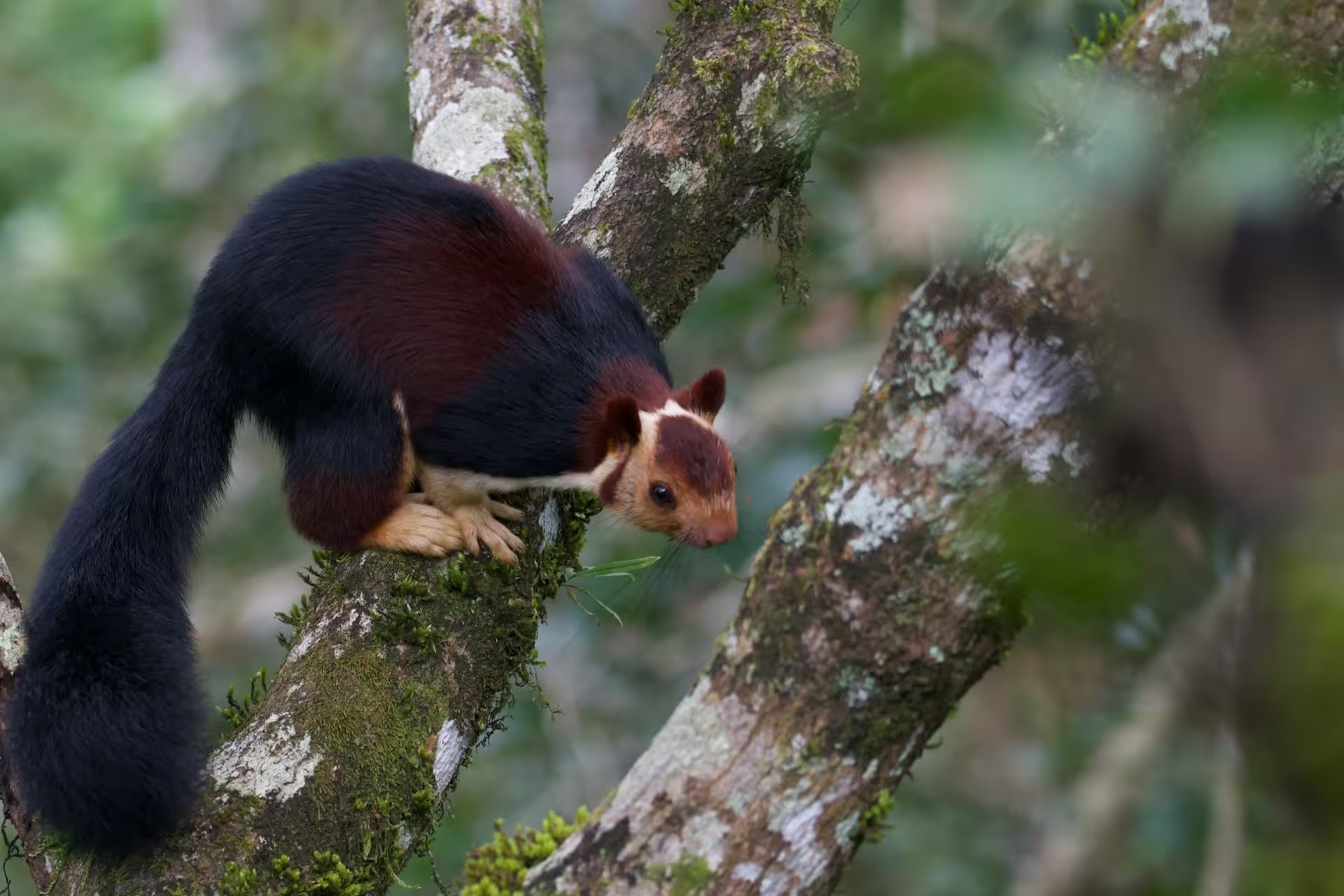
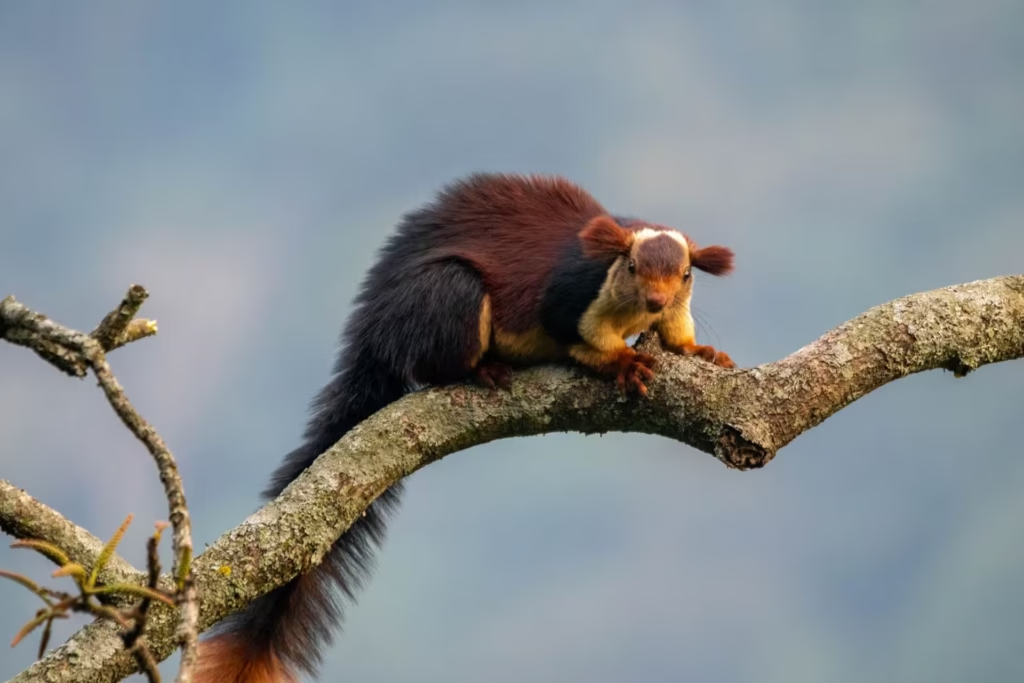
The Indian Giant Squirrel (Ratufa indica), often called the Malabar Giant Squirrel, is the most widespread of the three species in India. It occurs across parts of the Western Ghats, central India and some eastern forest areas. Adults can have a head and body length of about 25 to 45 cm, with the tail adding another 30 to 50 cm. Its coat can show rich shades of reddish-brown, black, cream and buff. The species spends much of its time in tall trees, where it feeds on fruits, seeds, bark and flowers. Peninsular forests offer some of the best chances to spot it.
Grizzled Giant Squirrel
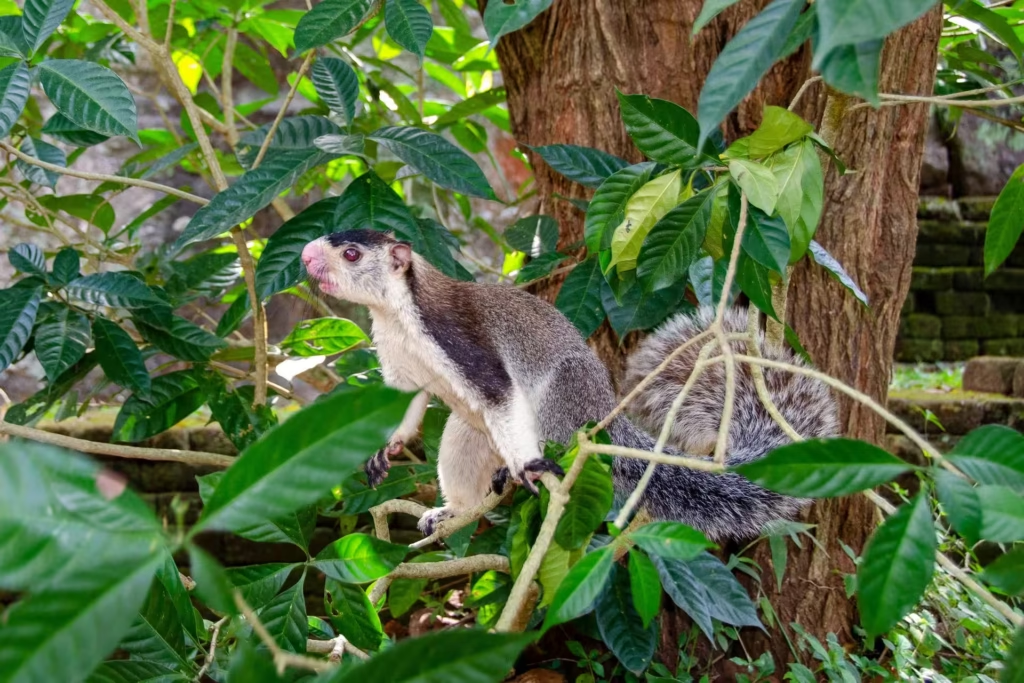
The Grizzled Giant Squirrel (Ratufa macroura) has a much more restricted range. In India, it occurs mainly in parts of Tamil Nadu and Kerala, with populations linked to riverine and dry forest habitats. Its grey, grizzled coat gives the species its common name. The species is smaller in range than the Indian Giant Squirrel and faces pressure from habitat loss. The Srivilliputhur region of Tamil Nadu is one of the best-known areas for this squirrel.
Black Giant Squirrel
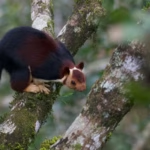
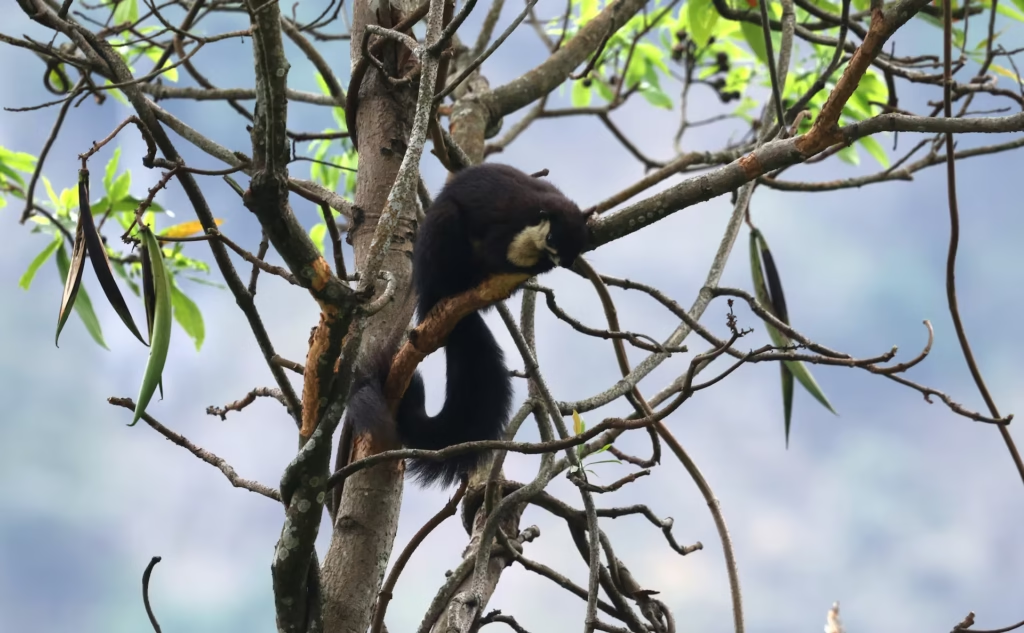
The Black Giant Squirrel (Ratufa bicolor) is recognised by its dark upper body, large size and long bushy tail. In India, it occurs mainly across forested areas of the Northeast, including Arunachal Pradesh, Assam and parts of other northeastern states. It prefers mature forests with plenty of tall trees. Its distribution connects India with a wider range across Southeast Asia. For wildlife observers, its dark coat makes it particularly striking against green forest canopies.
Indian Giant Squirrel: The Most Famous Giant Squirrel in India
The Indian Giant Squirrel (Ratufa indica) is one of India's most distinctive tree-dwelling mammals. It belongs to the family Sciuridae and spends most of its life above ground. The species is closely tied to mature forest cover, where tall trees provide food, shelter and routes through the canopy. Its distribution covers several forest regions across peninsular and central India. For wildlife watchers, spotting one often starts with listening for movement in the branches before searching the canopy.
What Does the Indian Giant Squirrel Look Like?
The Indian Giant Squirrel has a head and body length of roughly 25 to 45 cm. Its tail can reach about 50 cm, giving the animal a total length close to 90 cm in large individuals. The tail is broad and heavily furred, helping it balance on branches. Coat colours vary by region and population. Some squirrels show deep reddish-brown upper parts with cream or buff underparts. Others have darker patches across the head, back or legs. Compared with the familiar Indian Palm Squirrel, it is several times larger and has a much fuller tail.
Where Is the Indian Giant Squirrel Found?
The species occurs across several forest belts in India. The Western Ghats hold important populations, particularly in Maharashtra, Karnataka, Goa, Kerala and Tamil Nadu. Central Indian forests support populations in parts of Madhya Pradesh and adjoining regions. Records also occur from sections of the Eastern Ghats. The squirrel prefers forests with mature trees and a connected canopy. It can use evergreen, semi-evergreen and deciduous forests, provided enough food trees and nesting sites remain. Areas such as the Satpura region and parts of Maharashtra offer suitable habitat for this species.
What Does the Indian Giant Squirrel Eat?
The Indian Giant Squirrel has a varied plant-based diet. Fruits form an important food source, especially during periods of seasonal abundance. It eats seeds, nuts and flowers, along with tender shoots and tree bark. Some observations also record feeding on insects and other animal matter. Large forest trees provide both food and safe feeding platforms. The squirrel often sits on a branch while holding food in its front paws. Its strong incisors help it open hard seeds and nuts.
Where Are Giant Squirrels Found in India?
Giant squirrels occupy several forest regions across India, but each species has a different range. The Indian Giant Squirrel has the broadest distribution, with populations across parts of peninsular and central India. The Grizzled Giant Squirrel has a much smaller range in southern India. The Black Giant Squirrel occurs mainly in the Northeast. Forest structure matters for all three species. Tall trees provide feeding sites, nesting places and safe routes through the canopy. This makes mature forests especially valuable for their survival.
Western Ghats
The Western Ghats support some of the best-known populations of the Indian Giant Squirrel. The species uses evergreen, semi-evergreen and moist deciduous forests across Maharashtra, Goa, Karnataka, Kerala and Tamil Nadu. Areas with tall trees and connected canopies provide good feeding and nesting conditions. Forest reserves in the Western Ghats support a wide range of other mammals and birds too. This makes the region particularly rewarding for wildlife watchers.
Central India
Central India provides suitable habitat for Indian Giant Squirrels across parts of Madhya Pradesh and neighbouring regions. Forests around Pench National Park and Kanha National Park contain mature trees, mixed woodland and dense vegetation that can support arboreal mammals. Visitors exploring these forests on a wildlife safari in India can sometimes spot giant squirrels high in the canopy. Sightings depend on habitat, season and animal activity.
Southern India
Southern India is particularly important for the Grizzled Giant Squirrel. Its Indian range is limited compared with the Indian Giant Squirrel. It occurs in parts of Tamil Nadu and Kerala, with some populations associated with riverine forests. The Srivilliputhur region of Tamil Nadu is one of the best-known areas for observing this species.
Northeast India
The Northeast supports the Black Giant Squirrel, especially in forested areas of Arunachal Pradesh and Assam. The species favours mature forests with tall trees and continuous canopy cover. Its dark coat and large size make it easy to distinguish from many smaller squirrels. Northeastern forests also support other canopy-dwelling mammals, giving wildlife enthusiasts more species to look for during forest visits.
Giant Squirrel Habitat in India
Giant squirrels depend on forests that provide food, shelter and safe movement through the trees. Their lives are closely linked to the upper canopy, so forest structure matters as much as forest size. The Indian Giant Squirrel habitat includes evergreen, semi-evergreen and deciduous forests across parts of India. The Grizzled Giant Squirrel uses specific forest and riverine habitats in southern India, while the Black Giant Squirrel favours mature forests in the Northeast. Each species has different habitat preferences, but all need enough trees to support feeding, nesting and movement.
Forests and Tree Canopies
Tall trees form the foundation of good giant squirrel habitat. These squirrels spend much of their time above the ground, moving between branches in search of food. A dense canopy gives them cover from predators and provides routes between feeding areas. Large trees offer suitable branches for their leafy nests. A connected canopy is especially useful for young squirrels and adults moving through the forest. Evergreen and semi-evergreen forests can provide food throughout much of the year, while mature deciduous forests offer fruits, seeds and flowers during seasonal periods.
Why Forest Connectivity Matters
Forest fragmentation can break the canopy into small, isolated patches. Giant squirrels then face longer gaps between trees and fewer safe routes between feeding areas. This can restrict daily movement and reduce access to seasonal food sources. Small forest patches can contain fewer mature trees suitable for nesting. Fragmentation can affect breeding too, as isolated groups have fewer opportunities to move between suitable areas.
Roads, farms, plantations and expanding settlements can divide once-connected forests. Protecting links between forest patches helps giant squirrels move through their range. It also benefits other canopy species that depend on mature trees. For the Indian Giant Squirrel, maintaining connected forest habitat remains a key part of long-term conservation.
Giant Squirrel Behaviour and Lifestyle
Giant squirrels spend most of their lives in trees, and their behaviour reflects this specialised lifestyle. Their strong limbs, sharp claws and long tails help them climb, leap and balance across branches. They use the forest canopy for feeding, resting, nesting and avoiding danger. Their daily activity often follows food availability and weather conditions. Wildlife watchers can sometimes hear branches moving before they spot the squirrel itself.
Are Giant Squirrels Arboreal?
Giant squirrels are strongly arboreal mammals. They spend much of their time high above the forest floor, moving between branches in search of food. Their powerful hind legs help them leap across gaps between trees. Sharp claws provide a firm grip on bark and branches. The long tail acts as a counterbalance during movement. They can descend to the ground on occasion, but trees remain their main living space.
What Do Giant Squirrels Eat?
Giant squirrels have a varied diet based mainly on plant foods. They eat fruits, seeds, nuts, flowers, tender shoots and tree bark. Their strong incisors help them open hard seeds and nuts. Seasonal changes can affect what food is available in the forest. A fruiting tree can attract a squirrel repeatedly for several days. Some observations have recorded giant squirrels eating insects and other animal matter too.
How Do Giant Squirrels Build Their Nests?
Giant squirrels build large, roughly spherical nests from twigs and leaves. They place these nests high in trees, often among sturdy branches that provide support and cover. One squirrel can use several nests across its home range. The nests provide a safe place for resting and raising young. Large mature trees are especially valuable since they offer suitable branches for nest construction.
Are Giant Squirrels Active During the Day?
Giant squirrels are mainly diurnal, so they are active during daylight hours. Their activity often peaks during the morning and later afternoon. During the hottest part of the day, they may rest among branches or inside dense foliage. This behaviour makes early morning and late afternoon useful periods for wildlife observation.
How to Identify Giant Squirrels in the Wild
Spotting a giant squirrel often starts with recognising its shape rather than its colour. These squirrels spend much of their time high in trees, so a quick glance through the canopy can reveal only part of the animal. Look for a large body, a long bushy tail and deliberate movement along branches. Binoculars help when the animal sits far above the ground. Give it time, and watch the surrounding branches for movement.
Size and Body Shape
Giant squirrels are much larger than familiar Indian Palm Squirrels. The Indian Giant Squirrel has a head and body length of roughly 25 to 45 cm. Its body looks sturdy, with strong limbs suited to climbing and jumping. The head appears relatively small compared with the body. Its large size becomes easier to judge when it moves beside smaller squirrels or birds.
Fur Colour and Markings
Fur colour varies between giant squirrel species and populations. The Indian Giant Squirrel can show combinations of reddish-brown, maroon, black, cream and buff. Some individuals have dark heads and backs with lighter underparts. The Grizzled Giant Squirrel has a more grey, flecked appearance. The Black Giant Squirrel has predominantly dark fur. Use colour with body shape and location to identify the species, rather than relying on one marking alone.
Long Bushy Tail
The long tail is one of the easiest features to notice. In the Indian Giant Squirrel, it can approach 50 cm and looks broad and heavily furred. The squirrel often holds its tail above or behind the body while moving. The tail also helps with balance during jumps and quick turns on narrow branches.
Movement Through the Canopy
Watch the branches rather than scanning randomly across the forest. Giant squirrels often move with quick bursts between feeding or resting points. Listen for rustling leaves, falling twigs and movement in dense foliage. Keep binoculars ready and avoid sudden movements. Early morning and late afternoon can be useful periods for observation. Stay on designated trails and keep a comfortable distance from wildlife.
Best Places to See Giant Squirrels in India
India offers several forest regions where wildlife watchers can look for giant squirrels. The best places depend on the species and its geographic range. Central Indian forests support Indian Giant Squirrels, while the Western Ghats hold important populations across several states. Southern India is particularly relevant for the Grizzled Giant Squirrel. Sightings are never guaranteed, so patience and careful observation matter. Look high into mature trees, especially around fruiting trees and areas with dense canopy.
Satpura and Central Indian Forests
Satpura National Park and the surrounding forests provide suitable habitat for the Indian Giant Squirrel. The area contains teak-dominated woodland, mixed deciduous forests and patches of denser vegetation. These habitats support many tree-dwelling animals. Look for giant squirrels in mature trees near forest trails and water sources. Early morning visits can provide good wildlife activity. A quiet approach and binoculars can make canopy observation much easier.
Pench National Park
Pench National Park spans forest areas in Madhya Pradesh and Maharashtra. Its teak and mixed deciduous forests contain mature trees that provide food and nesting sites for Indian Giant Squirrels. Visitors exploring the park on safari can watch the canopy alongside the forest floor. Keep scanning branches during slower sections of the drive. A squirrel can remain still for several minutes before suddenly moving between trees.
Kanha National Park
Kanha National Park is best known for tigers, leopards and hard-ground barasingha, but its forest supports many smaller mammals too. Indian Giant Squirrels can occur in suitable wooded areas with mature trees. Safari routes pass through sal and mixed forest habitats, giving visitors opportunities to watch the canopy. Carry binoculars and ask your naturalist to help identify movement high in the trees.
Western Ghats Wildlife Destinations
The Western Ghats are among the most important regions for the Indian Giant Squirrel. Forests across Maharashtra, Karnataka, Goa, Kerala and Tamil Nadu contain suitable habitat. Evergreen, semi-evergreen and moist deciduous forests provide food and nesting sites. Protected areas such as Bhimashankar Wildlife Sanctuary and Silent Valley National Park support rich forest biodiversity. A wildlife safari in India that includes Western Ghats forests can add giant squirrels to a broader wildlife experience.
Grizzled Giant Squirrel Habitats in Southern India
The Grizzled Giant Squirrel has a much smaller Indian range. The forests around Srivilliputhur in Tamil Nadu are among the best-known areas associated with the species. It uses riverine and dry forest habitats with suitable mature trees. The species also occurs in parts of Kerala. Quiet observation near forest edges, rivers and tree-rich areas can improve the chances of spotting one without disturbing wildlife.
Giant Squirrel vs Flying Squirrel: What's the Difference?
Giant squirrels and flying squirrels both live in trees, but their bodies and movement are quite different. Giant squirrels climb, run and leap between branches. Flying squirrels use a skin membrane between their limbs to glide from one tree to another. Their activity patterns differ too. Giant squirrels are mainly active during daylight, while many flying squirrel species are nocturnal.
| Feature | Giant Squirrel | Flying Squirrel |
|---|---|---|
| Movement | Climbs and leaps between trees | Glides between trees |
| Gliding membrane | Absent | Present |
| Activity | Mostly daytime | Often nocturnal |
| Appearance | Large body with a bushy tail | Body adapted for gliding |
| Examples in India | Indian Giant Squirrel | Indian flying squirrel species |
Do Giant Squirrels Fly?
Giant squirrels do not truly fly or glide. They move through trees by climbing, running and making powerful leaps between branches. Their long tails help them maintain balance during these movements. A giant squirrel can cross gaps between trees, but it does so through a jump rather than a controlled glide. Flying squirrels use a patagium, a skin membrane stretching between their limbs, to glide.
Why Are They Sometimes Confused?
Both animals spend much of their lives high in forest trees, so they can appear similar at first glance. Their large tails and tree-dwelling habits add to the confusion. The key difference is movement. A giant squirrel jumps between branches, while a flying squirrel stretches its limbs and glides. Time of observation can help too. Giant squirrels are mainly active during the day, while flying squirrels are often seen after dark.
Conservation Status of Giant Squirrels in India
Giant squirrels depend on healthy forests, so changes to forest habitat can directly affect their populations. The Indian Giant Squirrel has a wider range than the Grizzled Giant Squirrel, while the Black Giant Squirrel is mainly associated with northeastern forests. Their conservation status differs by species, but habitat protection remains a common need. Protected forests, wildlife sanctuaries and national parks provide important refuge. Forest corridors can further support movement between suitable habitat patches.
Threats to Giant Squirrels
Habitat loss is one of the main threats facing giant squirrels in India. Roads, settlements, agriculture and other development can remove mature forest. Forest fragmentation then separates tree canopies and makes movement harder. Infrastructure projects can create gaps between feeding and nesting areas. The loss of large trees is particularly serious since giant squirrels depend on mature trees for food and nests. Hunting can affect some local populations too. Small, isolated forest patches can leave squirrels with fewer food sources and suitable nesting sites. Protecting connected forest cover is therefore important for maintaining viable populations.
How India Protects Giant Squirrels
India protects giant squirrel habitat through national parks, wildlife sanctuaries, reserved forests and other protected areas. Forest conservation helps retain mature trees, food plants and nesting sites. Protected areas in the Western Ghats, central India and southern India support Indian and Grizzled Giant Squirrel populations. Northeastern forest reserves provide habitat for the Black Giant Squirrel. Habitat restoration and maintaining links between forest patches can further support populations outside protected areas.
Why Giant Squirrels Matter to Forest Ecosystems
Giant squirrels form an important part of India's forest biodiversity. Their feeding habits connect them with many tree species, fruits and seeds. Their movements through the canopy make them useful indicators of forest health. Protecting their habitat also protects other animals that depend on mature trees. A healthy giant squirrel population reflects the presence of functioning forest ecosystems with enough food, shelter and connected tree cover.
Interesting Facts About Giant Squirrels of India
Giant squirrels have several features that make them stand out among India's forest mammals. Their size, colour and tree-dwelling habits make them fascinating subjects for wildlife watchers and photographers.
- Giant squirrels are expert tree climbers. Their strong limbs and sharp claws help them move across trunks and branches with ease.
- Their long tails provide balance. The bushy tail helps stabilise the body during leaps and quick movements along narrow branches.
- They build large leafy nests. Giant squirrels construct roughly spherical nests from twigs and leaves. They usually place them high in mature trees.
- Indian Giant Squirrels show striking colour variations. Their coats can combine reddish-brown, maroon, black, cream and buff shades.
- They are mainly active during daylight. Early morning and late afternoon can be useful periods for observing their activity.
- They can leap between branches. Strong hind legs allow them to cross gaps between trees without climbing down to the ground.
- India has three giant squirrel species. The Indian Giant Squirrel has the widest range. The Grizzled Giant Squirrel has a restricted range in southern India. The Black Giant Squirrel occurs mainly in northeastern India.
- Their habitat needs protection. Forest fragmentation can break canopy connections and reduce access to food and nesting trees.
- They are much larger than common squirrels. An Indian Giant Squirrel can have a head and body length of around 25 to 45 cm, with a tail approaching 50 cm.
- They spend most of their lives above ground. Mature trees provide food, shelter, nesting sites and routes through the forest canopy.
Frequently Asked Questions About Giant Squirrels of India
How many giant squirrels are found in India?
India is home to three giant squirrel species: the Indian Giant Squirrel (Ratufa indica), Grizzled Giant Squirrel (Ratufa macroura) and Black Giant Squirrel (Ratufa bicolor). Each species has a different distribution. The Indian Giant Squirrel has the widest range, while the other two have more restricted ranges in southern and northeastern India.
What is the largest squirrel in India?
The Indian Giant Squirrel is one of the largest squirrels found in India. Its head and body can measure around 25 to 45 cm, with a long tail that can approach 50 cm. Its large body, strong limbs and bushy tail make it much bigger than familiar species such as the Indian Palm Squirrel.
Where can I see giant squirrels in India?
You can look for giant squirrels in several forest regions across India. The Indian Giant Squirrel occurs in parts of the Western Ghats and central India. The Grizzled Giant Squirrel has a restricted southern range, including parts of Tamil Nadu. The Black Giant Squirrel occurs mainly in northeastern India.
What is the Indian Giant Squirrel famous for?
The Indian Giant Squirrel is known for its large size, long bushy tail and striking coat colours. It is an arboreal species that spends much of its life in forest canopies. Its reddish-brown, black, cream and buff markings can make it particularly impressive to see in mature Indian forests.
What do giant squirrels eat?
Giant squirrels mainly eat plant-based foods. Their diet includes fruits, seeds, nuts, flowers, tender shoots and tree bark. They use their strong incisors to open hard seeds and nuts. Some observations have recorded them eating insects and other animal matter. Food availability changes with seasons and forest conditions.
Are giant squirrels endangered in India?
The conservation status differs between species. Habitat loss, forest fragmentation and the removal of mature trees can affect giant squirrel populations. Roads and other infrastructure can divide forest habitat. Protected forests, national parks and wildlife sanctuaries provide important habitat. Maintaining connected tree cover remains important for long-term conservation.
Do giant squirrels fly?
No, giant squirrels do not fly or glide. They climb, run and leap between trees using their strong limbs and long tails for balance. Flying squirrels have a skin membrane called a patagium between their limbs. This membrane allows them to glide from one tree to another.
What is the difference between a giant squirrel and a flying squirrel?
Giant squirrels are mainly active during daylight and move through trees by climbing and jumping. Flying squirrels are often nocturnal and glide between trees using a membrane between their limbs. Giant squirrels have no gliding membrane. Their long, bushy tails help with balance rather than controlled aerial movement.
Final Thoughts on Giant Squirrels of India
India's squirrel diversity reflects the variety of forests found across the country. The three giant squirrel species each occupy different regions, from the Western Ghats and central forests to southern and northeastern India. Their lives depend on mature trees, connected canopies and reliable sources of natural food.
Seeing a giant squirrel adds another layer to a wildlife experience. A safari is not only about spotting large mammals. Look into the canopy, watch feeding trees and listen for movement among the branches. Binoculars can reveal animals that are easy to miss from the safari vehicle.
Responsible wildlife viewing matters. Keep noise low, follow park rules and never approach or feed wild animals. A giant squirrel sighting can turn a regular forest visit into a memorable wildlife safari in India, especially for visitors who take time to notice the smaller species that share these forests.