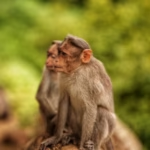
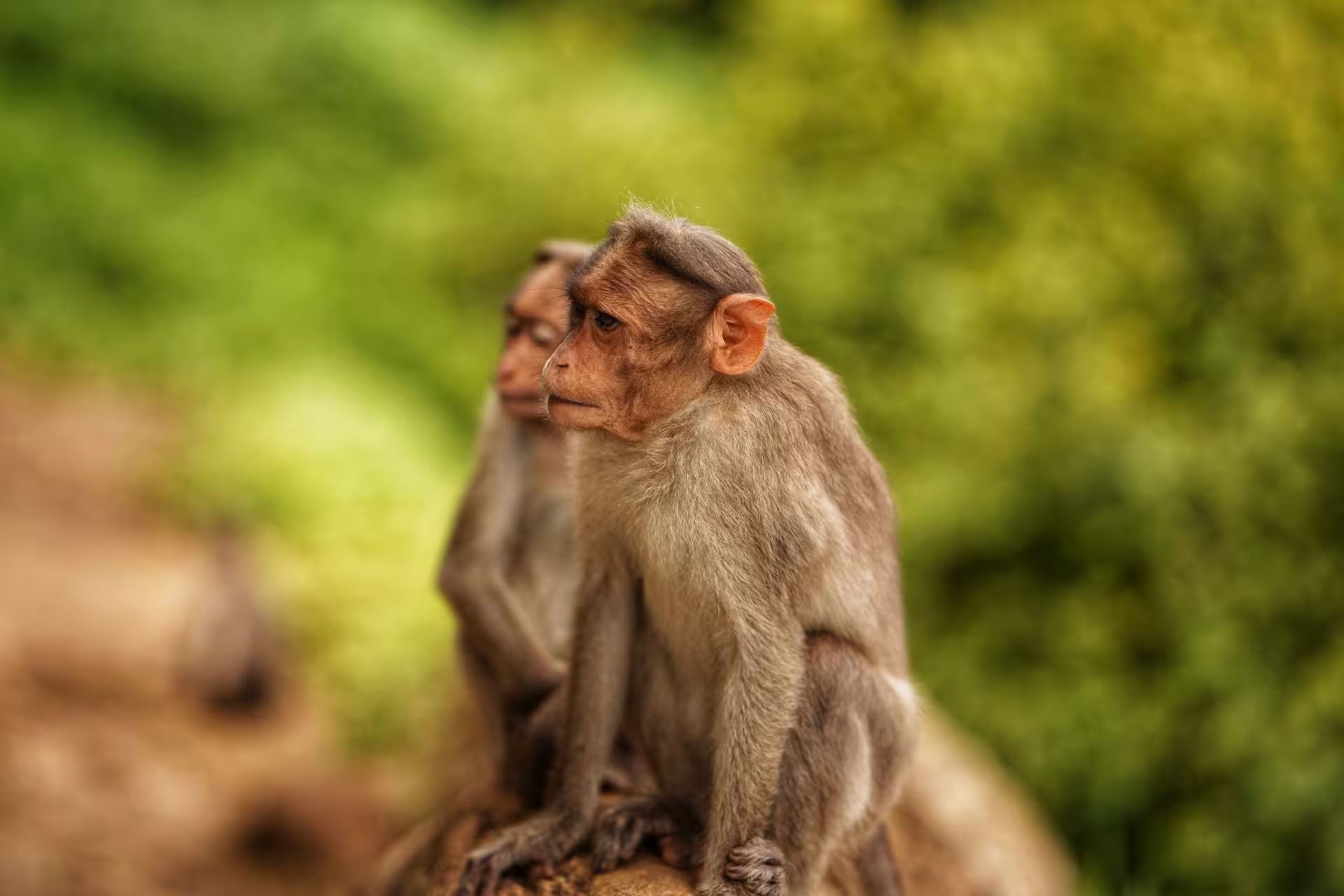
India supports a remarkable range of primates, from widespread macaques to rare rainforest specialists. The primates in India include macaques, langurs, lorises and hoolock gibbons. Each group has adapted to different forests, elevations and food sources across the country.
Rhesus macaques occur across much of northern and central India, while bonnet macaques are strongly associated with southern India. The Western Ghats support specialised species such as the lion-tailed macaque and Nilgiri langur. Northeast India is home to golden langurs, capped langurs, Assamese macaques and India's hoolock gibbons.
Some Indian primates face serious pressure from habitat loss, forest fragmentation, hunting and infrastructure development. The lion-tailed macaque, for example, survives mainly in fragmented evergreen forests of the Western Ghats. The western hoolock gibbon depends heavily on intact forest canopy in Northeast India.
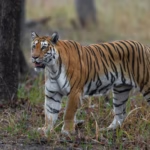
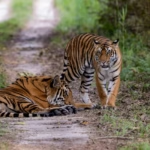
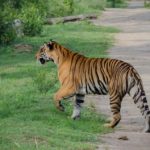
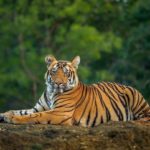
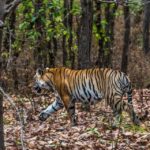
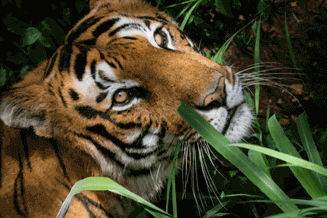
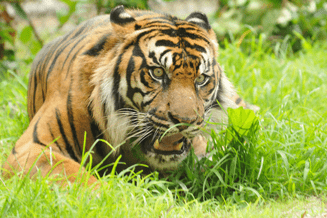
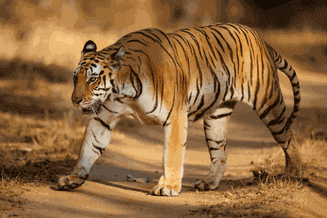
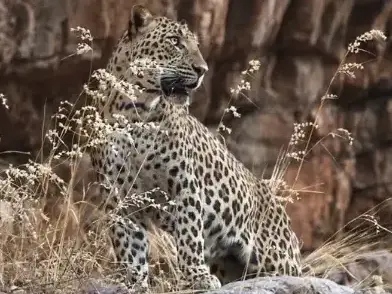
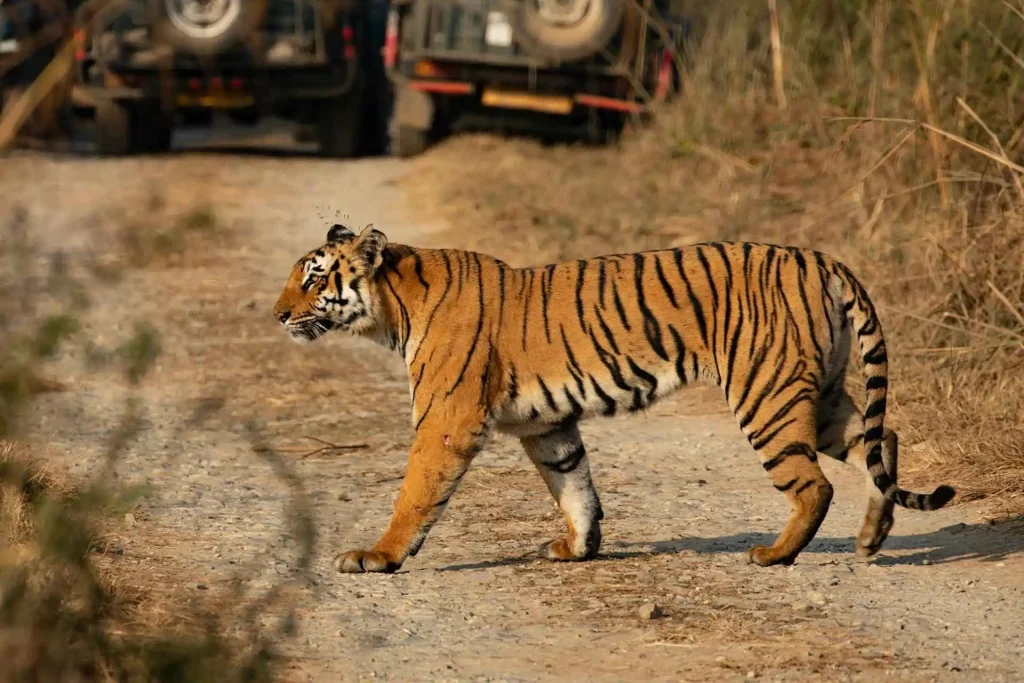
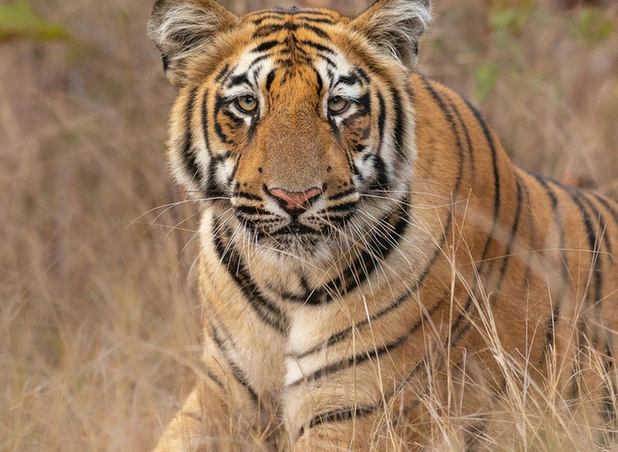
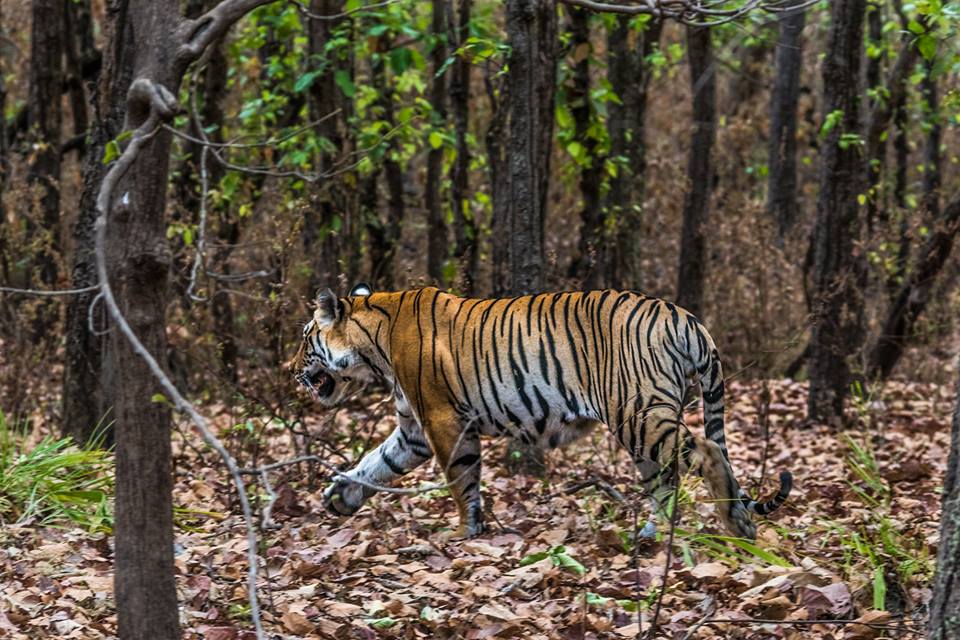
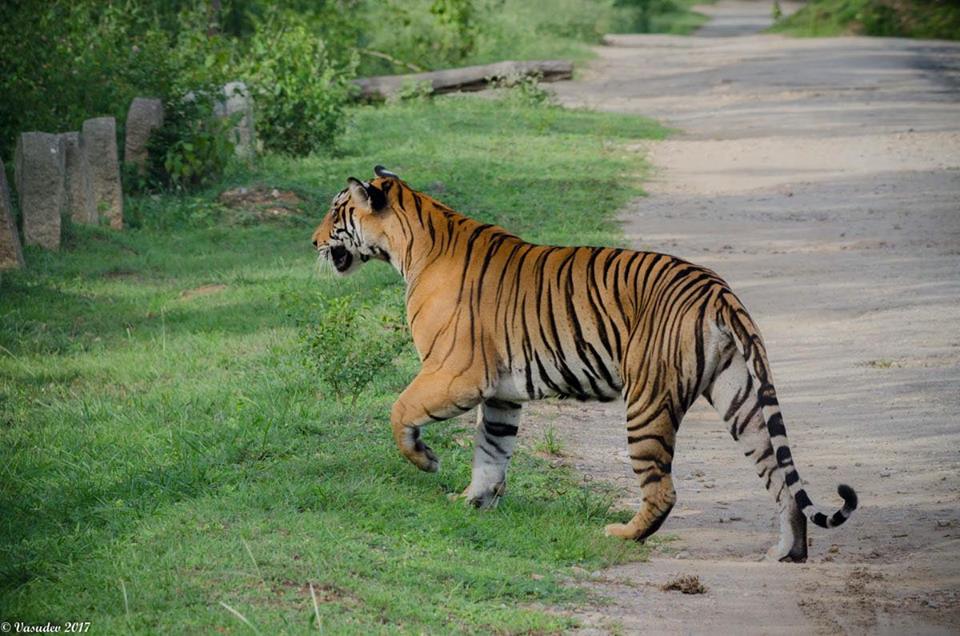
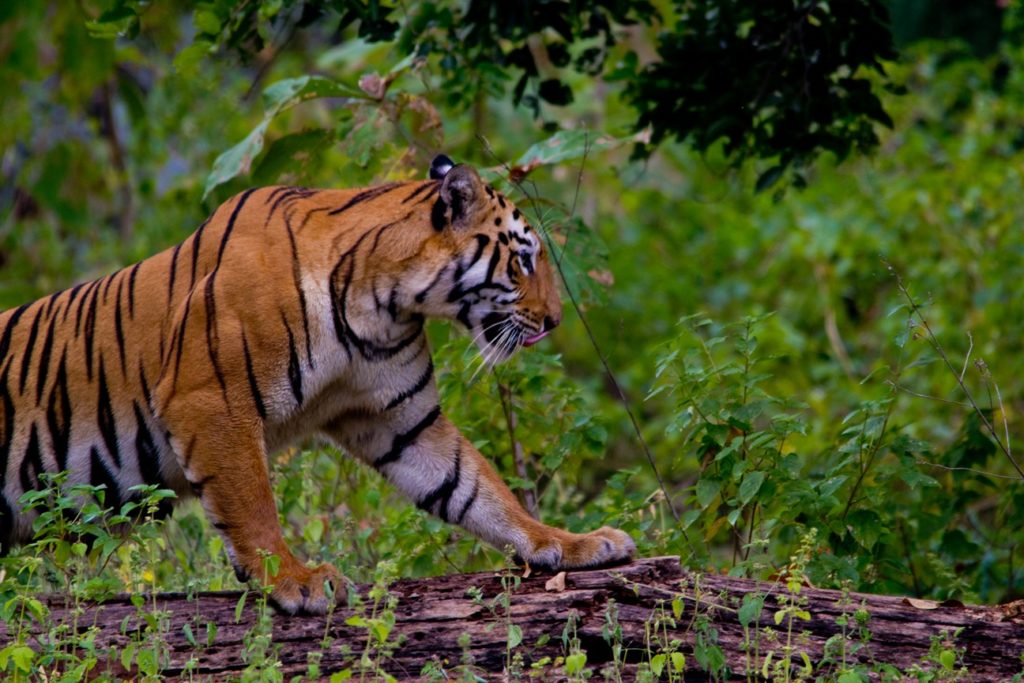
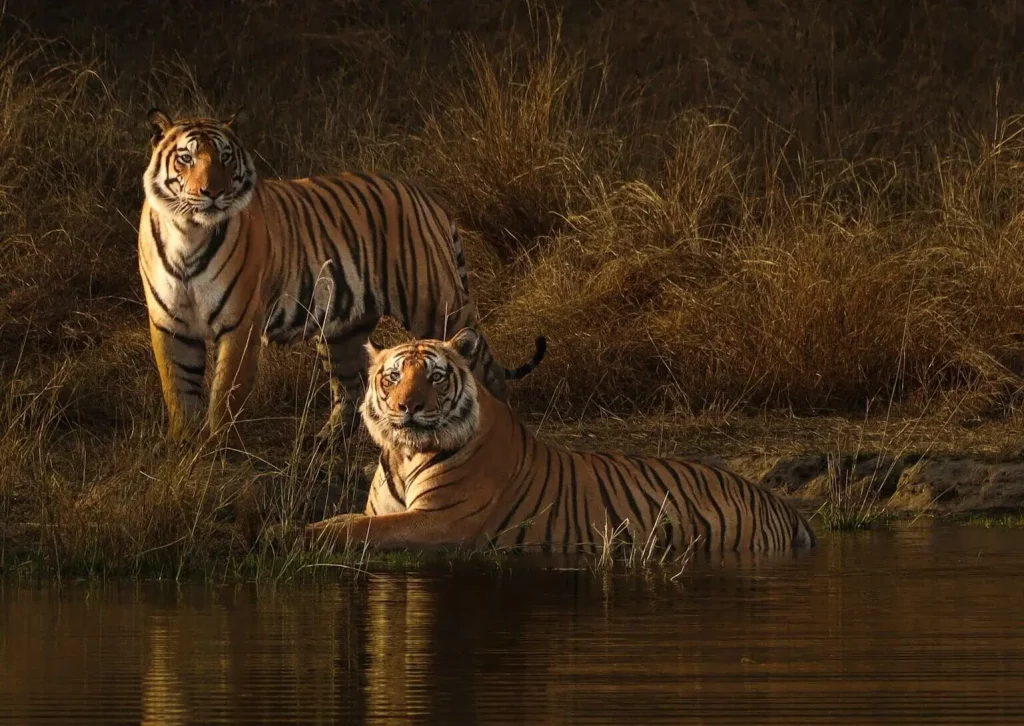
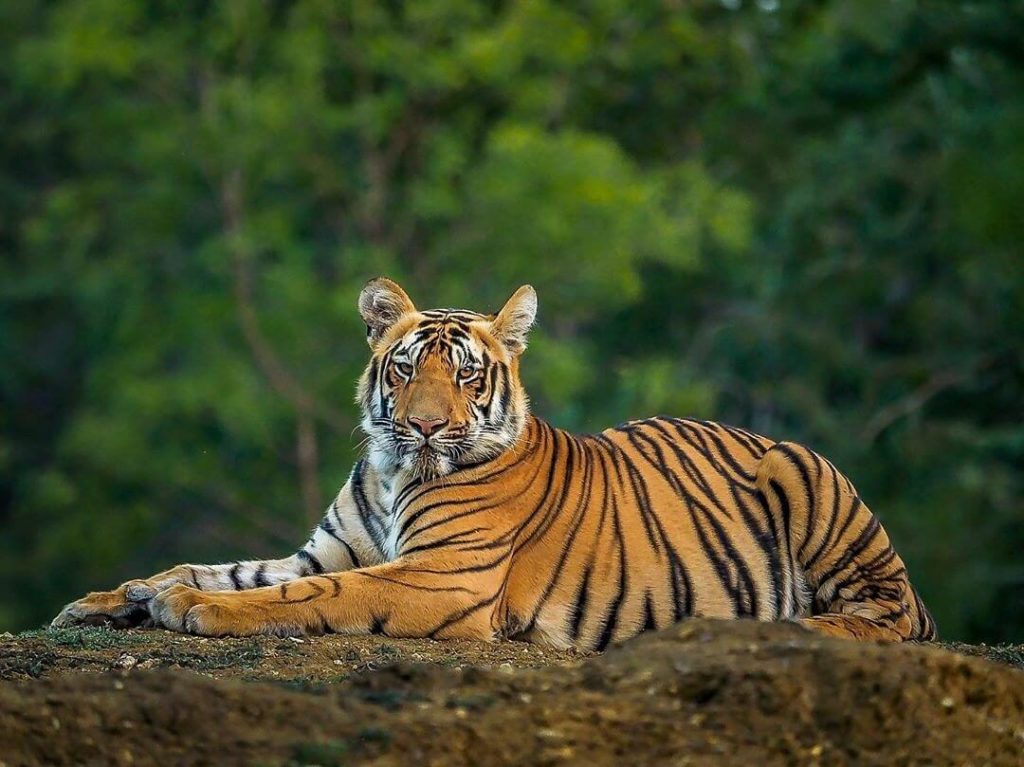
For travellers, primate watching adds another dimension to a wildlife safari in India. Many visitors combine primate sightings with a tiger safari in India, especially in parks where langurs and macaques share the same forests.
How Many Primate Species Are Found in India?
Understanding India's Primate Diversity
India has a diverse primate fauna spread across forests, grasslands and mountain regions. A primate is a mammal with features such as grasping hands or feet, forward-facing eyes and relatively large brains. Humans belong to the same mammalian order, but this guide focuses on India's wild non-human primates.
The term “monkey” does not cover this entire group. Macaques are monkeys with strong adaptability, and species such as the rhesus macaque can live close to people. Langurs are leaf-eating monkeys with long tails and specialised digestive systems. Lorises are small, nocturnal primates. Gibbons are apes, not monkeys, and India's hoolock gibbons live mainly in the forests of the Northeast.
Major Primate Groups in India
India's Indian primate species occupy very different habitats. The Zoological Survey of India lists hundreds of mammal species in its national collections and maintains extensive records of India's mammalian diversity.
| Group | Examples | Main Distribution |
|---|---|---|
| Macaques | Rhesus, bonnet, lion-tailed | North, central, western and southern India |
| Langurs | Hanuman, Nilgiri, golden | Across several regions |
| Lorises | Slender loris, Bengal slow loris | Southern and northeastern India |
| Gibbons | Western hoolock, eastern hoolock | Northeast India |
This regional spread explains why primates in India are so varied. A rhesus macaque in northern India lives in very different conditions from a lion-tailed macaque in the rainforests of the Western Ghats. Golden langurs and hoolock gibbons face another set of pressures in Northeast India. Their habitats, diets and behaviour differ, so counting them simply as “monkeys” misses much of India's primate diversity.
List of Primates Found in India
India's primate diversity spans the Himalayan foothills, central plains, Western Ghats and northeastern forests. The species below show how widely primates have adapted across the country. The Zoological Survey of India records species such as the rhesus macaque, bonnet macaque, lion-tailed macaque, Nilgiri langur and several northeastern primates in its mammal checklist.
Rhesus Macaque
Scientific name: Macaca mulatta
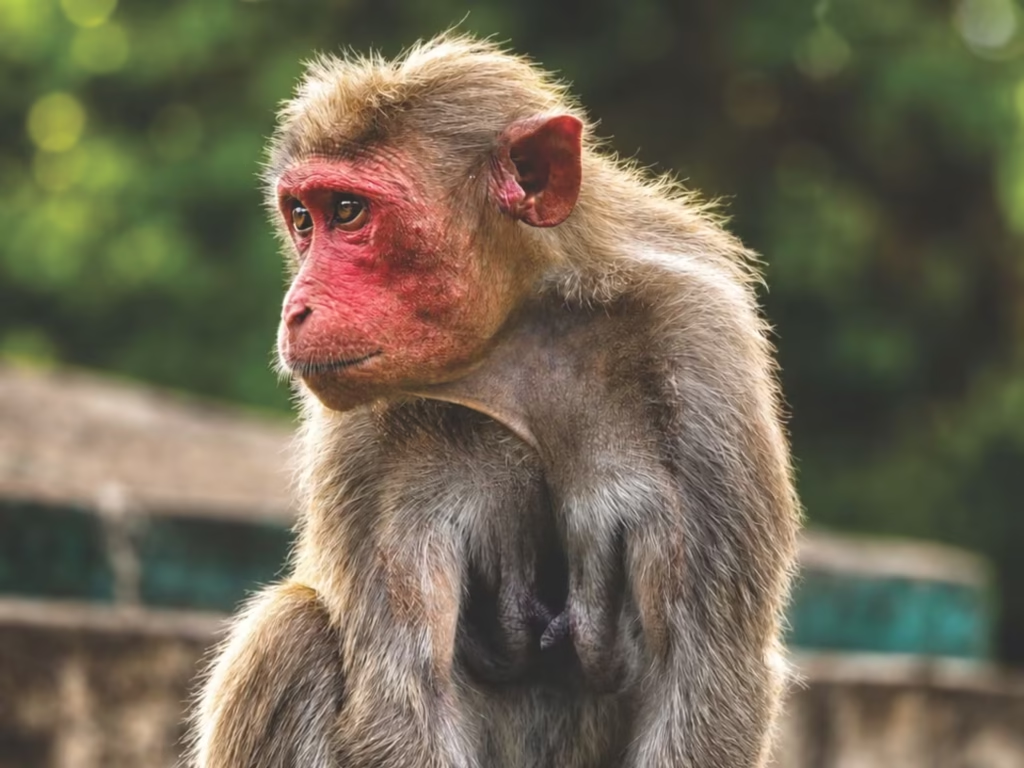
The rhesus macaque is one of India's most widespread primates. It has a pinkish face, brown-grey fur and a relatively short tail. Its range covers much of northern and northeastern India, with populations using forests, farmland, river areas and human-dominated places. Rhesus macaques eat fruits, seeds, leaves, insects and food discarded by people. They live in social groups and adapt well to changing habitats. The species is listed as Least Concern globally.
Bonnet Macaque
Scientific name: Macaca radiata
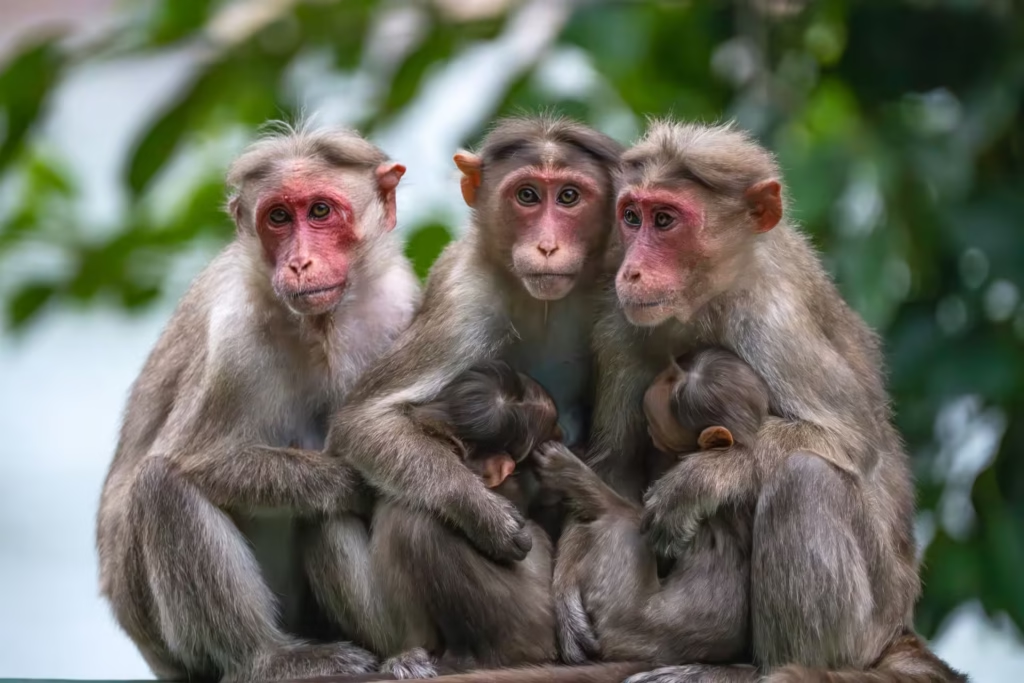
The bonnet macaque is closely associated with peninsular India. Its range includes southern India, Goa, parts of Maharashtra and Gujarat. It gets its name from the distinctive hair pattern that frames its head. These macaques use forests, scrub, plantations and areas near settlements. They feed on fruits, seeds, flowers, insects and other available foods. The Zoological Survey of India lists the bonnet macaque as endemic to India and classifies it as Least Concern.
Lion-Tailed Macaque
Scientific name: Macaca silenus
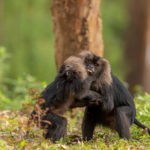
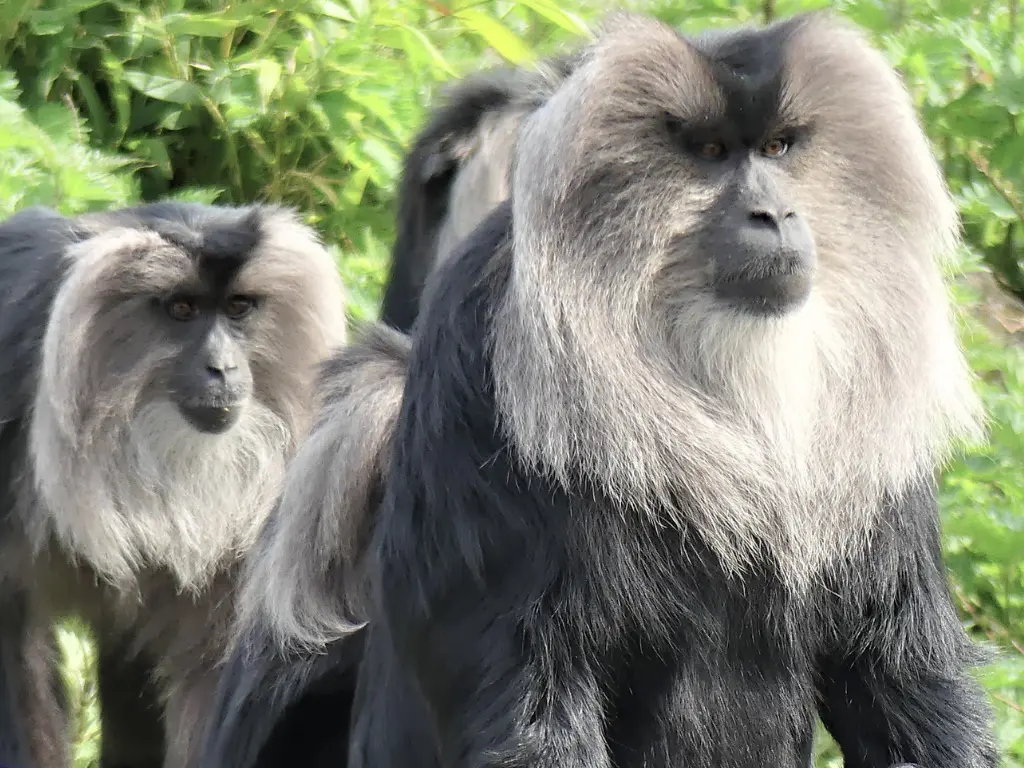
The lion-tailed macaque is one of India's most distinctive primates. It has black fur, a silver-white mane around the face and a tufted tail. The species is restricted to evergreen forests of the Western Ghats, mainly in Karnataka, Kerala and Tamil Nadu. It spends much of its time in the forest canopy and relies on mature rainforest for food and shelter. The species is Endangered, so protecting forest blocks and connecting fragmented habitats is a major conservation priority.
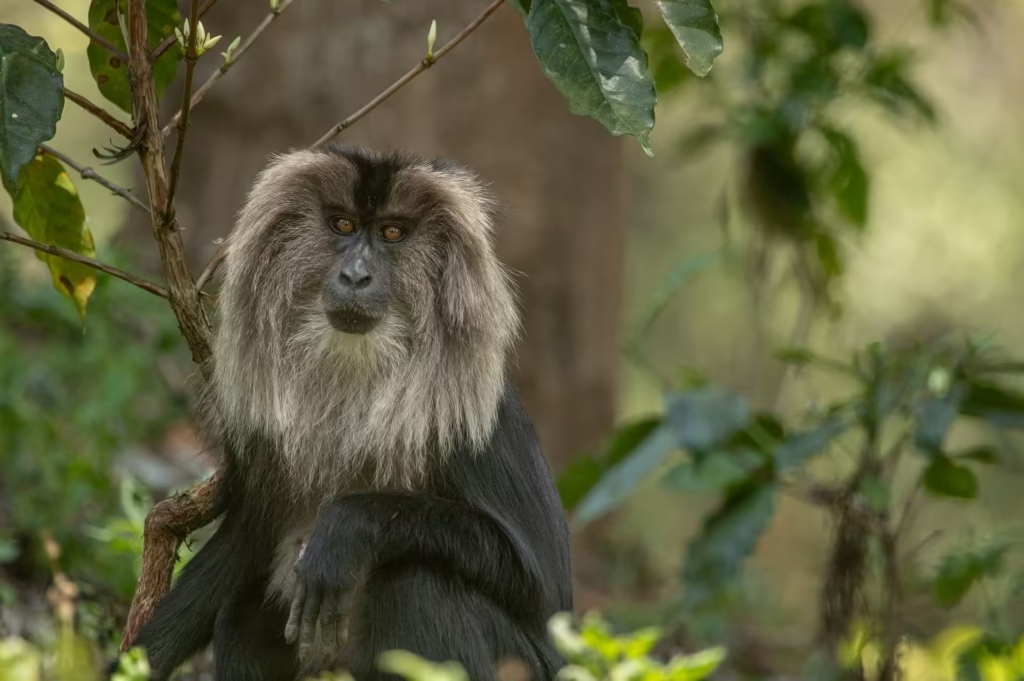
Nilgiri Langur
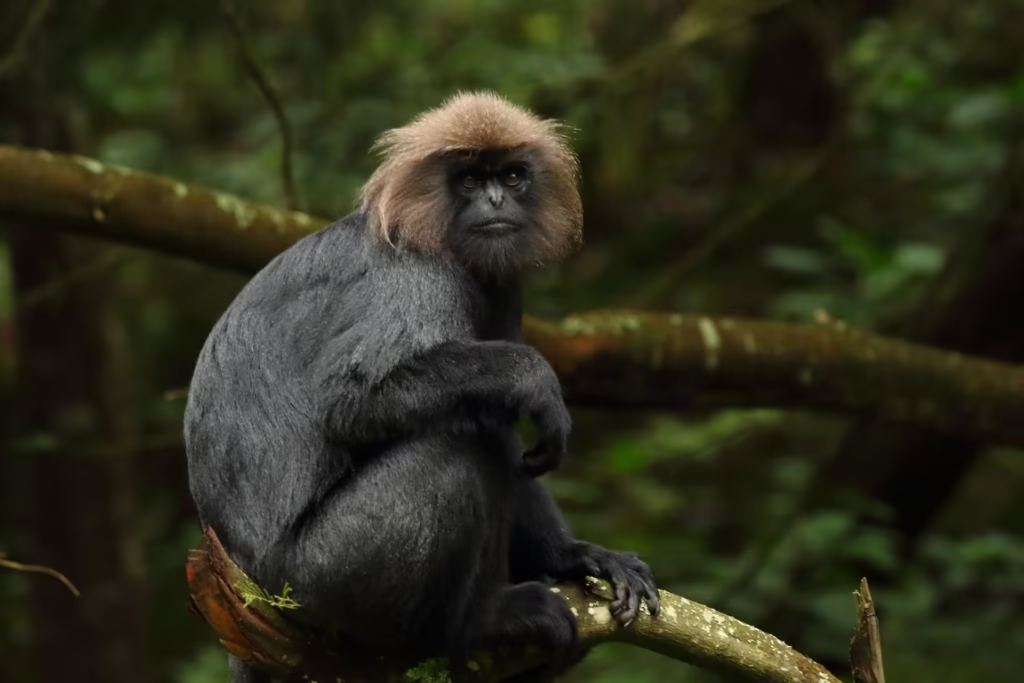
Scientific name: Semnopithecus johnii
The Nilgiri langur has a dark brown to black coat and a pale facial area. It occurs in the Western Ghats of Karnataka, Kerala and Tamil Nadu, with strong links to the forests around the Nilgiri Hills. These langurs spend much of their time in trees and feed largely on leaves, fruits and other plant material. The species is endemic to India and is classified as Vulnerable.
Hanuman Langur
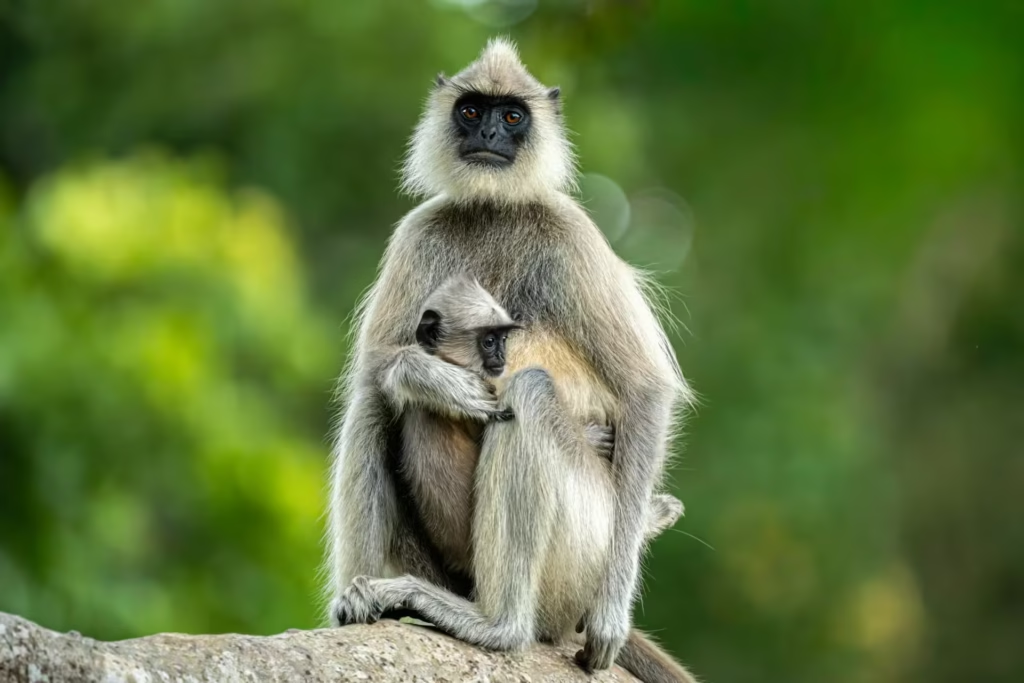
Scientific name: Semnopithecus entellus
The Hanuman langur is among India's most familiar wild primates. Its broad distribution covers states such as Madhya Pradesh, Maharashtra, Rajasthan, Gujarat, Uttar Pradesh, Bihar and Odisha. It can live in dry forests, open woodland, agricultural areas and towns. This adaptability helps the species occupy habitats that many forest specialists cannot use. The Northern Plains Gray Langur is listed as Least Concern in the Zoological Survey of India's checklist.
Golden Langur
Scientific name: Trachypithecus geei
The golden langur stands out for its rich golden or cream-coloured coat. In India, it occurs mainly in Assam and adjoining areas of the Northeast. Its distribution is much more restricted than that of the Hanuman langur. Golden langurs depend on forest habitat and are affected by habitat fragmentation and the loss of connections between forest patches. The species is listed as Endangered in India, making habitat protection a key conservation concern.
Nilgiri Langur and Other Western Ghats Langurs
The Nilgiri langur is one of several langurs found across southern India. The black-footed gray langur occurs in southern India and Maharashtra, and the tufted gray langur occurs in parts of southern India. Their ranges overlap in some areas, but their habitat preferences and physical features differ. This diversity makes the Western Ghats an important region for Indian langur conservation.
Slender Loris
Scientific name: Loris tardigradus
The slender loris is a small, nocturnal primate associated with southern India. It has large eyes, thin limbs and a compact body suited to life among branches and dense vegetation. It occurs in forests, scrub and other wooded habitats. Unlike macaques and langurs, slender lorises become active after dark. Their secretive habits make them difficult to spot during conventional daytime safaris.
Bengal Slow Loris
Scientific name: Nycticebus bengalensis
The Bengal slow loris is a nocturnal primate of northeastern India. It has large forward-facing eyes and moves slowly through the forest canopy at night. Forest clearing and habitat fragmentation threaten its populations. Its nocturnal behaviour makes direct sightings uncommon, even in areas where the species occurs. Protecting continuous forest cover remains central to its conservation.
Hoolock Gibbons
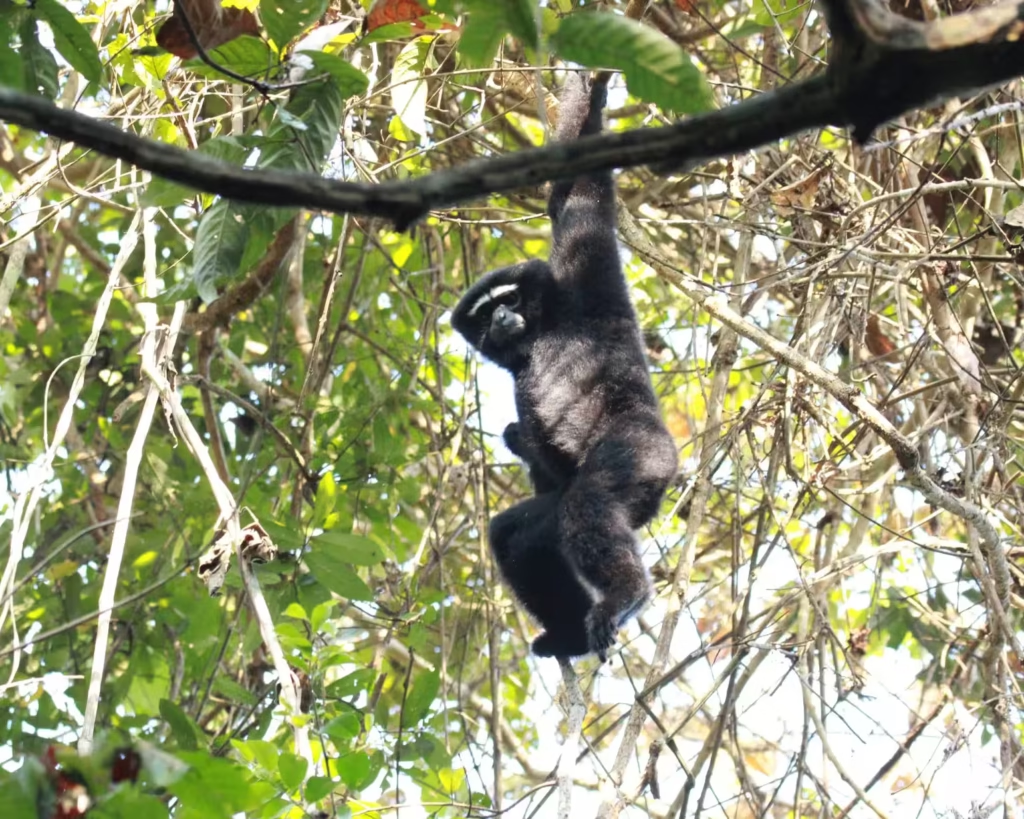
Hoolock gibbons are India's only native apes. The western hoolock gibbon and eastern hoolock gibbon occur in forested parts of Northeast India. These apes spend most of their lives high in the canopy and use their long arms to move between branches. Their loud calls can travel through dense forest, making sound an important way to locate them. Forest fragmentation poses a serious threat, since gibbons depend on connected canopy habitat. The Zoological Survey of India recognises hoolock gibbons among India's threatened primates.
Where Are Primates Found in India?
India's primates occupy several distinct regions, from tropical rainforests in the Western Ghats to broadleaf forests in the Northeast and Himalayan foothills. Their distribution reflects habitat, food availability and climate. Some species have wide ranges, while others survive in small forest pockets. The lion-tailed macaque, for example, has a far narrower range than the rhesus macaque.
Primates of the Western Ghats
The Western Ghats support some of India's most specialised primates. Lion-tailed macaques live mainly in mature evergreen and wet forests across parts of Kerala, Karnataka and Tamil Nadu. Nilgiri langurs occur across forested areas around the Nilgiri Hills and southern Western Ghats. Bonnet macaques use a wider range of habitats across peninsular India, including forests, plantations and scrub. The slender loris occupies wooded and scrub habitats in parts of southern India. Protected areas such as Silent Valley and the Anamalai landscape provide important habitat for several of these species.
Primates of Northeast India
Northeast India has some of India's rarest and most specialised primates. The golden langur has a restricted range around western Assam and neighbouring areas. Hoolock gibbons, India's only native apes, depend on connected forest canopy across the Northeast. The Bengal slow loris uses forest habitats and remains active mainly at night. Assamese macaques occur in forests across parts of Northeast India and neighbouring Himalayan areas. Forest fragmentation poses a serious threat across the region, especially for species that need continuous canopy.
Primates of the Himalayan Region
The Himalayan foothills provide forests, river valleys and mixed woodland suitable for several primate species. Rhesus macaques have a broad Himalayan distribution and can occupy forest edges and human-modified areas. Assamese macaques occur in parts of the eastern Himalayas and Northeast. Langurs also use foothill forests at lower elevations. Species composition changes with altitude, forest type and local climate.
Primates of Central and Northern India
Central and northern India support some of the country's most adaptable primates. Rhesus macaques occur across large parts of northern India and use forests, farmland and settlements. Hanuman langurs have an extensive range across central and northern states, including Madhya Pradesh, Rajasthan, Gujarat and Uttar Pradesh. Their ability to use dry forests, open woodland and human-modified areas helps them survive across a wide range of habitats.
Pench National Park, Kanha National Park and Bandhavgarh National Park offer opportunities to see Hanuman langurs and macaques alongside larger wildlife.
Best Places to See Primates in India
India offers excellent opportunities to observe primates in forests, wetlands, grasslands and mountain habitats. The best destination depends on the species you want to see. Western Ghats forests are particularly important for rainforest specialists, while Northeast India offers some of the country's rarest langurs, macaques and gibbons.
Kaziranga National Park, Assam
Kaziranga National Park supports several primate species across its woodland and forest habitats. Visitors can encounter capped langurs and rhesus macaques, with sightings often occurring along forest edges and safari routes. Kaziranga is best known for its rhinoceros and tiger population, but its primate diversity adds another interesting element to a wildlife safari.
Manas National Park, Assam
Manas National Park is one of the better places to look for golden langurs and Assamese macaques. The park combines forest, grassland and riverine habitats. Golden langurs are more closely associated with the forested areas around the park. A safari here can also produce sightings of elephants, wild buffalo, tigers and several bird species.
Dudhwa National Park, Uttar Pradesh
Dudhwa National Park has extensive sal forests, grasslands and wetlands. Rhesus macaques and Hanuman langurs are among the primates visitors can encounter. Langurs often appear near forest edges and open areas, where they feed and watch for predators. Dudhwa's Terai habitat also supports tigers, leopards, elephants, swamp deer and other wildlife.
Silent Valley National Park, Kerala
Silent Valley National Park protects one of Kerala's finest remaining tracts of tropical evergreen forest. The park forms part of the Western Ghats habitat used by the lion-tailed macaque, an Endangered primate found only in southern India. Dense canopy and mature rainforest make this region particularly valuable for primate conservation and specialist wildlife observation.
Anamalai and Valparai Landscape
The Anamalai and Valparai landscape in the southern Western Ghats is an important area for lion-tailed macaques and Nilgiri langurs. Forest fragments, tea estates and rainforest patches create a complex habitat mosaic. Lion-tailed macaques often move through canopy corridors between forest patches. The region offers one of India's better opportunities to study how primates respond to fragmented forest habitats.
Other Wildlife Areas for Primate Watching
Several other protected areas can add primate sightings to a wildlife trip. Nagarhole National Park and Bandipur National Park in Karnataka support bonnet macaques and langurs. Periyar Tiger Reserve in Kerala offers opportunities to see Nilgiri langurs and bonnet macaques. In Northeast India, Nameri National Park and forest areas around Gibbon Wildlife Sanctuary are relevant for primate enthusiasts. Namdapha National Park in Arunachal Pradesh has an especially rich primate fauna, with species adapted to different forest zones.
| Destination | Primates to Look For | Best Habitat |
|---|---|---|
| Silent Valley | Lion-tailed macaque | Evergreen rainforest |
| Valparai | Lion-tailed macaque, Nilgiri langur | Rainforest and plantations |
| Manas | Golden langur, Assamese macaque | Forest and grassland |
| Kaziranga | Capped langur, rhesus macaque | Woodland and forest |
| Dudhwa | Rhesus macaque, Hanuman langur | Sal forest and grassland |
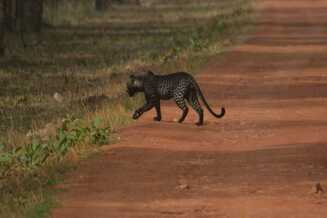
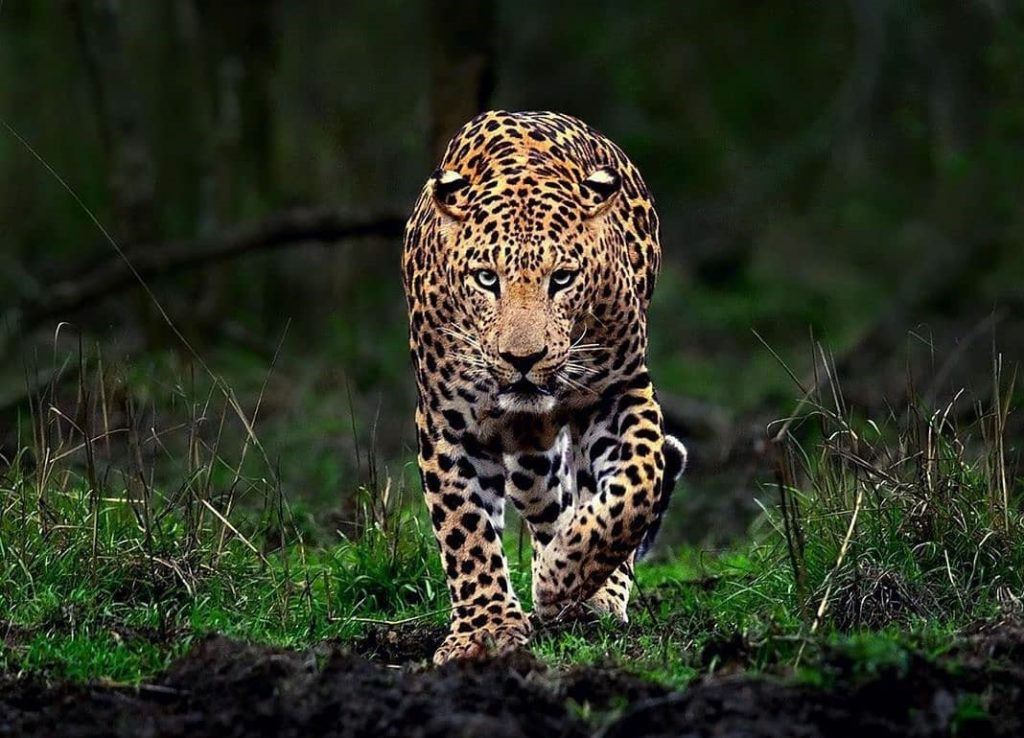
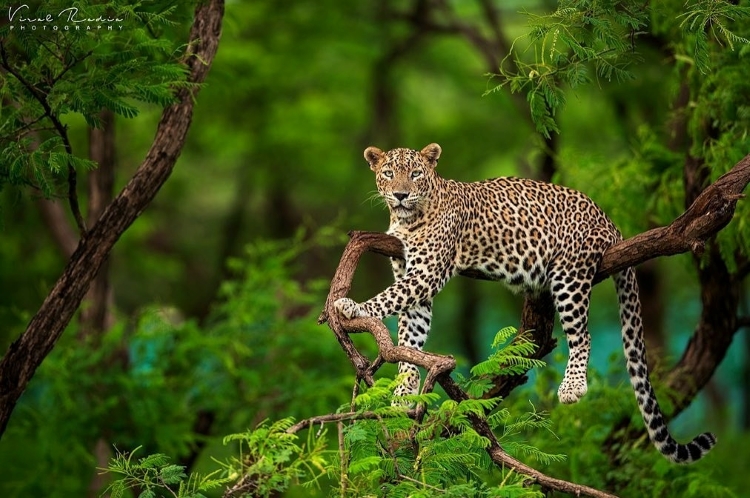
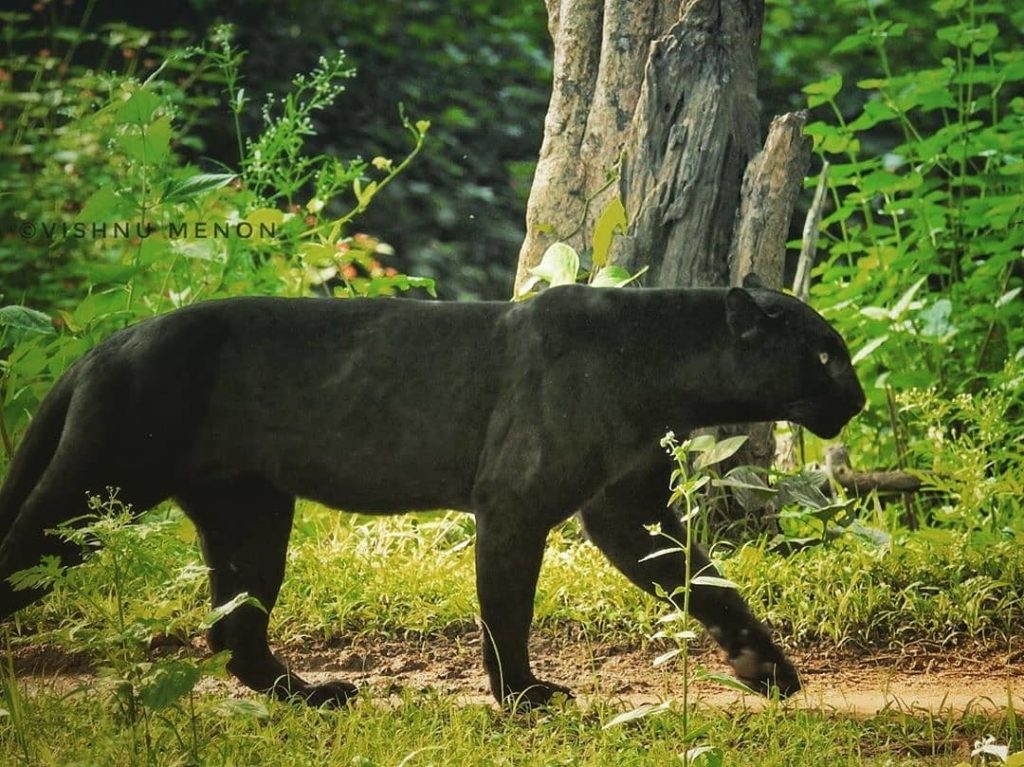
Visitors planning trips across India's national parks in India can include primate sightings alongside tiger and leopard safaris.
India's Most Endangered Primates
India's primates face very different levels of conservation pressure. Some species remain widespread, but others survive in small and fragmented populations. The lion-tailed macaque, hoolock gibbons and golden langur face particular pressure from forest loss and habitat fragmentation. Their survival depends on protecting forest cover, maintaining habitat connections and reducing human pressure.
Lion-Tailed Macaque
The lion-tailed macaque is classified as Endangered and has a restricted range in the Western Ghats. It depends on mature evergreen and semi-evergreen forests, where it spends much of its time in the canopy. Forest fragmentation isolates groups and reduces access to food and breeding areas. Roads, plantations and other development can break continuous forest into smaller patches. Protecting canopy connections remains a major conservation priority.
Hoolock Gibbons
India's western hoolock gibbon and eastern hoolock gibbon depend on connected forest canopy in Northeast India. Gibbons rarely come to the ground, so gaps between forest patches can isolate groups. Forest clearing, roads, agriculture and other infrastructure reduce suitable habitat. Hunting adds further pressure in some areas. Protecting continuous forest and restoring broken canopy corridors can help maintain viable populations.
Golden Langur
The golden langur has a restricted distribution in western Assam and neighbouring areas. Its striking golden coat makes it one of India's most recognisable primates. Forest fragmentation has separated populations and reduced movement between suitable habitats. Roads, agriculture and settlement growth can further divide forest patches. Conservation efforts focus on protecting remaining forests and maintaining connections between isolated groups.
Other Threatened Indian Primates
Other Indian primates face threats linked to habitat loss and human activity. Bengal slow lorises face forest clearance, hunting and illegal wildlife trade. Slender lorises also face pressure from habitat loss and capture. Infrastructure projects can divide forests and increase contact between people and wildlife. Human-wildlife conflict can add pressure around forest edges. Protecting habitat, controlling illegal capture and maintaining forest corridors are key parts of primate conservation.
What Do Primates in India Eat?
Indian primates eat a varied diet shaped by their species, habitat and available food. Macaques often have flexible diets, while many langurs rely heavily on plant material. Lorises feed at night and include insects in their diet. Hoolock gibbons depend heavily on forest fruits and other plant foods.
Fruits, Leaves and Seeds
Fruits, leaves, seeds, flowers and shoots form a major part of many primate diets. Hanuman langurs eat substantial amounts of leaves, while Nilgiri langurs consume leaves, fruits and other plant matter. Lion-tailed macaques feed on fruits, seeds and other forest foods found in evergreen rainforest canopies.
Insects and Other Foods
Macaques often eat insects, small invertebrates, flowers and tree bark alongside plant foods. Slender lorises are skilled nocturnal hunters and eat insects, small animals, fruits and plant material. Hoolock gibbons also eat young leaves, flowers and occasional animal foods.
How Diet Changes by Species and Habitat
Food availability shapes where primates live and how they behave. Evergreen forests provide fruiting trees for lion-tailed macaques and hoolock gibbons. Dry forests support adaptable macaques and langurs with broader diets. Seasonal changes can shift feeding patterns, forcing primates to search wider areas for fruit, leaves, seeds and insects.
Behaviour and Adaptations of Indian Primates
Indian primates show remarkable differences in movement, feeding, communication and social behaviour. These traits help species survive in habitats ranging from dense Western Ghats rainforest to dry central Indian forests. Their behaviour also affects how easily visitors can observe them. Some species stay high in the canopy, while others spend considerable time on the ground.
Arboreal and Ground-Dwelling Primates
Many Indian primates are strongly arboreal, meaning they spend most of their lives in trees. Lion-tailed macaques and hoolock gibbons move through forest canopies using branches and climbing routes. Langurs also spend much of their time in trees but can descend to the ground. Rhesus macaques and Hanuman langurs often use both trees and ground habitats, giving them greater flexibility in open forests.
Social Groups and Communication
Group living helps many primates find food, raise young and detect predators. Macaques and langurs often live in organised social groups with clear relationships between individuals. They use facial expressions, body movements and vocal communication to maintain contact. Alarm calls can warn the group about predators. Gibbons use loud, distinctive calls to communicate across the forest canopy and defend their territories.
Nocturnal Primates
Slender lorises and Bengal slow lorises are mainly nocturnal. Their large forward-facing eyes help them locate food in low light. They move slowly through branches and use their strong grip to remain secure. Their night-time activity reduces competition with many daytime primates and helps them exploit insects, fruits and other food sources.
How Primates Adapt to Different Habitats
Indian primates show strong habitat-specific adaptations. Hoolock gibbons rely on long arms and flexible shoulders for rapid canopy movement. Langurs use social groups and alarm calls to detect threats in forests and open woodland. Macaques show greater dietary flexibility and can occupy forests, farmland and urban edges. Territorial behaviour becomes especially important for gibbons and some forest specialists. These adaptations help different primate species occupy distinct ecological niches across India.
Threats to Primates in India
India's primates face pressure from habitat change, infrastructure, hunting and shifting climate patterns. The level of risk varies by species. A widespread rhesus macaque can adapt to disturbed areas, but a forest specialist such as the lion-tailed macaque needs mature rainforest. Small populations face greater risks when their habitat becomes isolated.
Habitat Loss and Fragmentation
Deforestation removes feeding and breeding areas for forest-dependent primates. Fragmentation creates smaller forest patches and separates groups that once moved freely through connected habitat. Lion-tailed macaques, hoolock gibbons and golden langurs face particular pressure from fragmented forests. Small isolated populations have fewer opportunities to exchange genes and recolonise areas after local population declines.
Roads, Railways and Infrastructure
Roads, railways, power lines and other infrastructure can divide forests into smaller blocks. They can also create barriers between primate groups. Arboreal species face an added problem when roads break canopy connections. Hoolock gibbons depend on continuous tree cover, so canopy gaps can restrict their movement. Vehicle collisions can affect primates that regularly cross roads or descend to the ground.
Human-Wildlife Conflict
Conflict increases where settlements, farms and infrastructure reach forest edges. Rhesus macaques and Hanuman langurs sometimes enter agricultural fields or urban areas in search of food. Crop damage can create tension with local communities. Feeding by tourists and residents can change natural behaviour and increase dependence on human food. Better waste management and responsible wildlife viewing can reduce these problems.
Hunting and Illegal Wildlife Trade
Hunting threatens several less visible primate species, especially in parts of Northeast India. Slow lorises can face capture for the illegal wildlife trade. Hunting also removes breeding animals from small populations. Strong enforcement, community participation and protection of forest habitat are needed to reduce these pressures.
Climate Change
Climate change can alter fruiting seasons, rainfall patterns and forest conditions. Primates that depend on specific food plants may face food shortages during prolonged droughts or changing seasons. Rising temperatures can place extra pressure on species already restricted to small habitats, such as the lion-tailed macaque and Nilgiri langur.
Conservation of Primates in India
Primate conservation in India depends on protecting forests, maintaining habitat connections and reducing direct human pressure. Protected areas provide legal protection for many species, but some primates also live outside park boundaries. This makes forest corridors and cooperation with local communities important for long-term conservation.
Protected Areas and Wildlife Corridors
National parks, wildlife sanctuaries and tiger reserves protect important primate habitat across India. Silent Valley National Park and the Anamalai landscape protect Western Ghats forests used by lion-tailed macaques and Nilgiri langurs. Manas National Park supports golden langurs and other northeastern primates. Wildlife corridors connect separated forest patches and allow animals to move between feeding areas, breeding groups and safer habitat.
Conservation Programmes
Indian conservation programmes focus on habitat protection, species monitoring and reducing human pressure. Government agencies, forest departments, research institutions and conservation groups monitor threatened species such as the lion-tailed macaque, golden langur and hoolock gibbons. Field surveys help researchers track population trends and identify areas that need stronger protection.
Protecting Forest Canopies and Habitat Connectivity
Canopy continuity is especially important for arboreal primates. Hoolock gibbons need connected trees for movement, feeding and social activity. Roads and forest clearing can create gaps that isolate groups. Planting native trees and protecting existing forest corridors can reconnect fragmented habitats. Protecting mature rainforest also preserves the fruits, leaves and shelter that many species depend on.
How Travellers Can Support Primate Conservation
Wildlife visitors can support primate conservation through responsible behaviour. Never feed animals, and maintain a safe viewing distance. Avoid disturbing nocturnal species with lights or noise. Follow park regulations during safaris and forest visits. Choose responsible safari operators that respect wildlife rules and support local conservation efforts. Small changes in visitor behaviour can reduce stress on wild primates.
How to Identify Common Primates in India
Spotting a primate becomes easier once you know what to look for. Body colour, facial markings, tail shape, size and movement can help separate similar species. Location is another useful clue. A dark primate moving through the Western Ghats canopy could be a Nilgiri langur, while a golden-coated langur in Assam points strongly toward the golden langur.
| Primate | Key Identification Feature | Main Region |
|---|---|---|
| Rhesus macaque | Pinkish face and brown-grey coat | North and much of India |
| Bonnet macaque | Distinctive hair pattern around head | Southern India |
| Lion-tailed macaque | Black body and silver-white mane | Western Ghats |
| Nilgiri langur | Dark body and pale facial area | Western Ghats |
| Golden langur | Golden-yellow coat | Northeast India |
| Hoolock gibbon | Long arms and canopy movement | Northeast India |
| Slender loris | Small body and large eyes | Southern India |
The lion-tailed macaque is particularly easy to recognise from its silver-white mane and black body. The golden langur stands out through its golden coat. Hoolock gibbons look different from India's monkeys because they are apes with very long arms and no visible tail. The slender loris is much smaller and has unusually large eyes suited to its nocturnal lifestyle.
For safari visitors, identification also depends on behaviour. Macaques often move between trees and ground areas. Langurs frequently sit high in trees or feed on leaves. Gibbons travel through the canopy using their long arms. Slender lorises are active after dark, so spotting one requires patience and specialist night surveys.
Frequently Asked Questions About Primates in India
How many primate species are found in India?
India has a diverse primate fauna, with species belonging to several groups, including macaques, langurs, lorises and hoolock gibbons. The exact count varies with taxonomic classification and species revisions. Indian primates occupy habitats from the Himalayan foothills and central forests to the Western Ghats and northeastern rainforests.
What are the most common primates in India?
Rhesus macaques and Hanuman langurs are among the most widespread primates in India. Both species tolerate a broad range of habitats and can live near agricultural areas and settlements. Bonnet macaques are common across much of southern India. Their ability to use different food sources helps these species maintain large distributions.
Which is the most endangered primate in India?
The lion-tailed macaque is one of India's most threatened primates and is classified as Endangered. It has a restricted range in the Western Ghats and depends on mature evergreen forest. Habitat fragmentation has isolated populations and reduced suitable forest. Protecting remaining rainforest and restoring connections between forest patches are key conservation priorities.
Where can I see lion-tailed macaques in India?
The best areas include parts of the Western Ghats in Kerala, Karnataka and Tamil Nadu. Silent Valley National Park and the Anamalai landscape are notable locations. Sightings are never guaranteed, as lion-tailed macaques spend much of their time high in dense forest canopies.
Where can I see golden langurs in India?
Western Assam is one of the main areas for golden langurs in India. Manas National Park and surrounding forest habitats provide opportunities to look for them. Their range is restricted, and sightings depend on local conditions. A knowledgeable naturalist can help identify them through their distinctive golden coat and behaviour.
Are there gibbons in India?
Yes. India is home to hoolock gibbons, which occur in the northeastern part of the country. The western hoolock gibbon and eastern hoolock gibbon are India's native gibbons. They spend most of their lives in forest canopies and use their long arms to move between branches.
What is India's only native ape?
The hoolock gibbon is India's only native ape group. Unlike monkeys, hoolock gibbons have no tail and have long arms adapted for movement through tree canopies. They live mainly in northeastern forests. Their dependence on connected canopy makes forest fragmentation a serious threat to their survival.
Which national parks are best for seeing primates in India?
Several protected areas offer good opportunities for primate sightings. Silent Valley National Park is known for lion-tailed macaques. Manas is relevant for golden langurs and Assamese macaques. Kaziranga supports capped langurs and rhesus macaques. Dudhwa offers sightings of rhesus macaques and Hanuman langurs. Sightings vary by season and location.
Are monkeys and primates the same thing?
No. Monkeys are primates, but not all primates are monkeys. India's primates include macaques and langurs, which are monkeys, along with lorises and hoolock gibbons. Gibbons are apes, while lorises belong to a separate primate group. Humans are primates too, but they are not part of India's wild primate fauna.
Final Thoughts on Primates in India
India's primate diversity reflects the country's extraordinary range of forest habitats. Rhesus macaques thrive across broad areas, while lion-tailed macaques depend on the evergreen forests of the Western Ghats. Golden langurs and hoolock gibbons rely on the forests of Northeast India. Each species has its own habitat needs, feeding patterns and social behaviour.
Protecting these animals starts with protecting the forests they depend on. The Western Ghats need intact rainforest and connected canopy for species such as the lion-tailed macaque and Nilgiri langur. Northeastern forests need strong protection for golden langurs, hoolock gibbons and Bengal slow lorises. Forest corridors are just as important as protected areas for species that move between fragmented habitats.
For travellers, primate watching adds another dimension to an Indian safari. A troop of langurs, a macaque moving through the canopy or a distant gibbon call can reveal a side of India's wildlife that many visitors miss. Responsible tourism keeps these encounters respectful. Maintain distance, never feed animals and follow local forest rules. Good wildlife tourism can support conservation while giving visitors a deeper connection with India's forests.