Gir National Park
Gir Wildlife Sanctuary (Sasan Gir)
Get ready for a unique and exciting adventure at Gir National Park, deep within the dry deciduous Gujarat jungles. It is the last abode of the royal Asiatic Lion among other thriving species.
The park has a stunning landscape of rocky hills, valleys and calming rivers covering over 1,410 sq km. Gir is the perfect tourist destination for wildlife lovers who want to see a diverse surrounding contradictory to the usual dense vegetation of other National Parks.
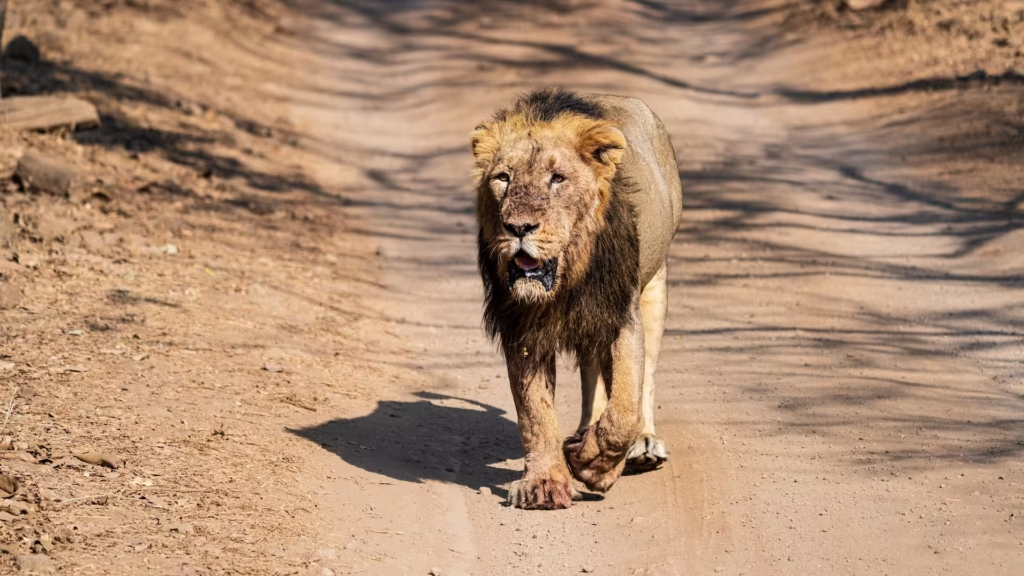
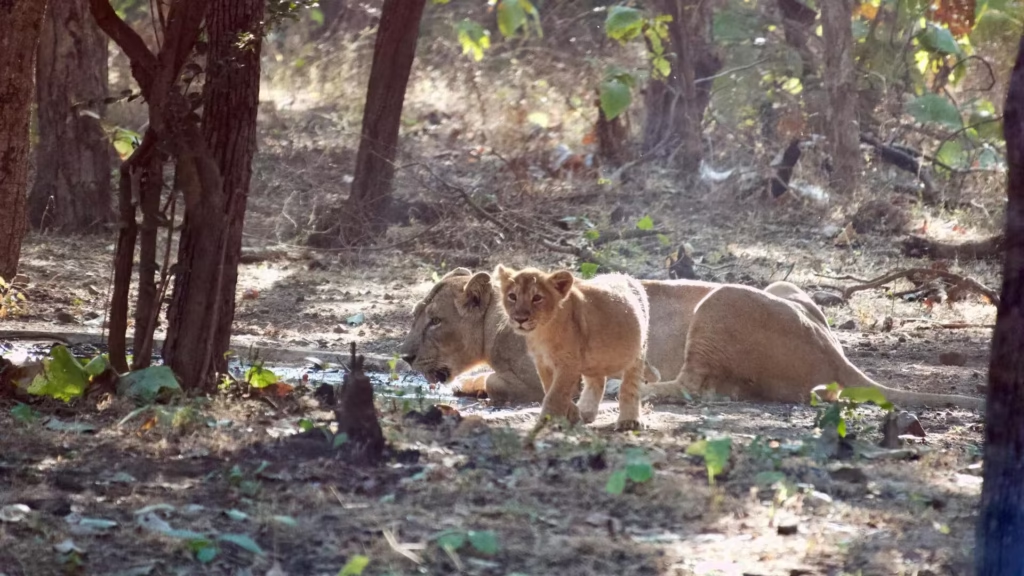
Without a doubt, the highlight of Gir is the endangered majestic Asiatic Lion. The park is recognised for their conservation efforts in restoring these powerful predators that were once on the verge of extinction.
So, pack your bags, bring along your binoculars and camera to explore this must-visit park, loved by conservationists, naturalists, and visitors from all around the globe.
1,412
sq. km Total Area
Gujarat
Location
1965
Protected Area Established
Rajkot
Nearest Airport
Interesting Fact – Gir National Park
The Gir forest was once the private hunting ground of the Nawabs of Junagadh. Thankfully, their passion for hunting also led to a degree of protection for the Asiatic lion population.
Gir forms the catchment of seven perennial rivers including Hiran, Saraswati, Datardi, Shingoda, Machhundri, Ghodavadi and Raval, supporting wildlife and the surrounding landscape.
Prime Predators
Gir’s top predators are Asiatic Lions, Leopards, Stripted Hyena and jungle Cats
Famous For?
Gir is famous for its Asiatic Lions. The 2025 population estimation recorded 891 lions across the wider Saurashtra landscape.
Major Wildlife
Asiatis Lion, Leopards, Spotted Deer, Stripted Hyena, Wild Boar, Chinkara, Sambar Deer and 425 Bird Species
Protected Land
The Gir Protected Area covers 1,412.1 sq. km, including 258.7 sq. km of National Park and 1,153.4 sq. km of Wildlife Sanctuary
Flora & Fauna in the Park
This pleasant climate and flora call for a large diversity of fauna. The star is the Asiatic Lion adapted well to the forests. Their mane and ability to climb trees for shelter makes them stand apart from the African Lions. Look out for herbivores like nilgai (Asia’s largest antelope), spotted deer and chinkara gazelle.
Sloth bears, hyenas and leopards balance the food chain here. Birdwatchers are in for a treat as Gir has eagles, peafowls, Indian florican, owls and more. An enhanced biodiversity can be observed by reptiles like crocodiles and the Indian cobra that call this place home.
Botanical Canopy & Floral Cover
Key Flora & Forest Habitat
Gir is a dry deciduous forest dominated by teak, along with Tendu, Dhak, Jamun and Acacia. Neem and Peepal add evergreen cover, while open scrub and grasslands feature Charal, Umro and Karanj. Casuarina and Prosopis are also found in parts of the landscape.
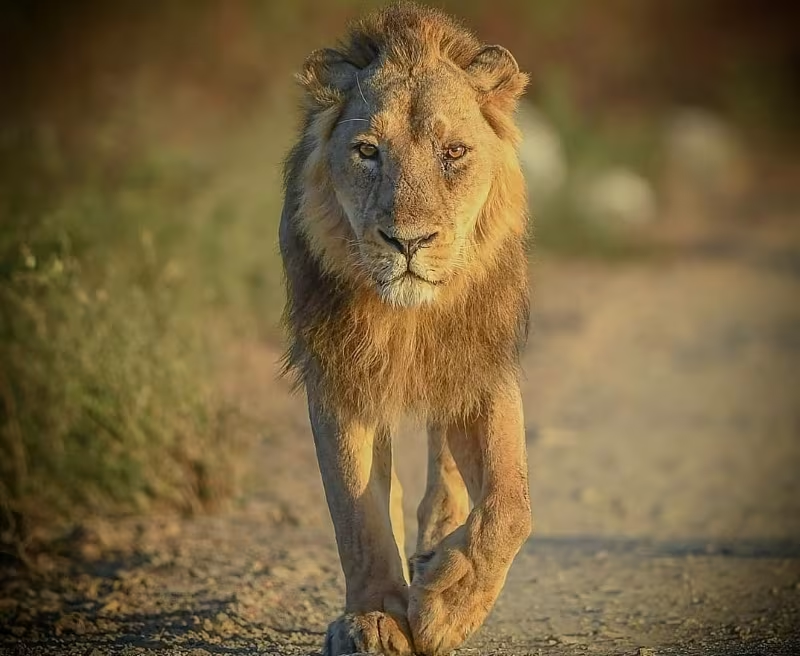
891 Asiatic Lions, the 2025 lion population estimation recorded 891 Asiatic lions across the Saurashtra landscape.
Mammals
Apex Predators, felids & prime ungulates
Apex Predators & Carnivores
- Asiatic Lion
- Striped Hyena
- Indian jackal
- Jungle Cat
Forest Herbivores & Small Fauna
- Chinkara
- Four-horned Antelope
- Nilgai
- Sambar Deer
- Wild Boar
Beyond Asiatic lions, Gir supports leopards, striped hyenas, jackals, chital, sambar, nilgai, chinkara, four-horned antelope, wild boar and marsh crocodiles. The forest also has diverse birdlife, reptiles and smaller mammals.
Avifauna (Birds)
- Black drongo
- Common buzzard
- Crested serpent eagle
- Indian peafowl
- Indian sandgrouse
- Oriental pratincole,
- ainted spurfowl
- Pied bushchat
- Sarus crane
- White-breasted kingfisher
Herpetofauna (Reptiles)
- Black cobra
- Indian rock python
- Indian star tortoise
- Monitor lizard
- Russell’s viper
- Saw-scaled viper
- Sind krait
- Spotted gecko
- Varanus bengalensis
- Water snake
Safari in Gir National Park
Doing a jungle safari at Gir National Park is a thrilling and adventurous experience. The main attraction of the safari is sighting a lion that is extremely rewarding. You can do an open jeep safari usually taking about 3 hours. Touring through the dry forests while watching wildlife gives you in-depth knowledge of the park’s ecosystem.
Savouring the smell of the fragrant flora around when strolling through natural trails is very refreshing. Gir Interpretation Zone (Devalia Safari) is a shorter safari in an eco-tourism protected area. It is designed specially for lion sighting.
You can also enjoy Night Safari in Gir to experience the thrill of sighting predators and nocturnal animals like owls, jackals, and leopards. Make the best of nature trail walks and bird excursion programs if any are available at the time of your visit.
Open jeep safaris are available twice daily at fixed timings in the early morning and evening. 4×4 Jeep has a group of tourists with an expert guide who leads the route to explore the forest and spot maximum wildlife including lions.
Gir remains closed during the monsoon season of Mid June to Mid October due to heavy rains and animals’ breeding season.
Jai & Veeru - Famous Lions of Gir National Park
Jai and Veeru were two famous male Asiatic lions of Gir, named after the iconic characters from the Bollywood film Sholay. They became well known for staying together and were frequently seen by tourists and wildlife photographers in the Gir landscape.
Their close association made them particularly popular among visitors, and photographs and videos of the pair became widely shared. Both lions died in 2025, marking the end of a memorable chapter in Gir's wildlife stories.
Open Jeep Safari
Be ready for the thrill of a jeep safari with 4-6 passengers. A trained jeep driver and a naturalist with years of experience will ride along for your adventure.
You will have to book your vehicle separately from your Jungle Permit if you are booking directly from the official website. But, if you book via Big Cats India, we take care of everything.
Canter Safari
Gir's main jungle trail is operated through open safari vehicles. For a larger group experience, Devalia Safari Park also offers bus safaris with fixed time slots
Best for: Families and larger groups.
Safari Timings
Gir Jungle Safari operates in morning and afternoon slots. From 16 October to 28/29 February, safaris run from 6:30 AM to 9:30 AM and 3:00 PM to 6:00 PM. From 1 March to 15 June, timings are 6:00 AM to 9:00 AM and 4:00 PM to 7:00 PM. Gir Jungle Safari remains closed from 16 June to 15 October.
Safari Zones or Gates
Gir has two main safari zones and one gate that poses as the entry point for all jeeps. Limited number of jeeps are allowed into the park at any given time to reduce disturbing the wildlife. This number is different based on the zone and season you plan your visit.
Usually, 60-70 jeeps are allowed during one shift for the Gir Jungle Trail Safari whereas only 30-40 jeeps enter the Devalia Safari.
Sasan Gir Zone
This zone is covered by a large area within Gir and offers safaris that are 3 hours long. Due to more detailed track routes and time duration, this zone offers an increased chance of spotting diverse wildlife.
You are able to immerse yourself into this wilderness further and have a closer look at the flora and fauna hidden well inside the forest.
Devalia Interpretation Zone
This is a smaller zone compared to the previous one and offers 1.5 hours safari tours. It specifically prioritises lion sightings in a designated eco-tourism area. Devalia has the highest density of these strong predators and enhances your chances of spotting them in the wild.
If you are a tourist specially here for watching lions, this is the safari for you. Even families with kids/ babies opt for this short but fulfilling experience.
| Zone Name | Type | Entry Gate |
|---|---|---|
| Sasan Gir | Main Safari Zone / Core Zone | Sinh Sadan (Primary Reporting Point) |
| Devaliya | Interpretation Zone | Devaliya Park Entrance |
| Ambardi | Interpretation Zone | Accessed within Gir Jungle Trail |
| Kamaleshwar | Internal Route | Accessed within Gir Jungle Trail |
| Dalkhaniya | Internal Route | Accessed within Gir Jungle Trail |
| Timbi | Internal Route | Accessed within Gir Jungle Trail |
Gir Safari Tours
Select from our bespoke, budget, or multi-park central India tiger circuits crafted for enthusiasts and photographers.
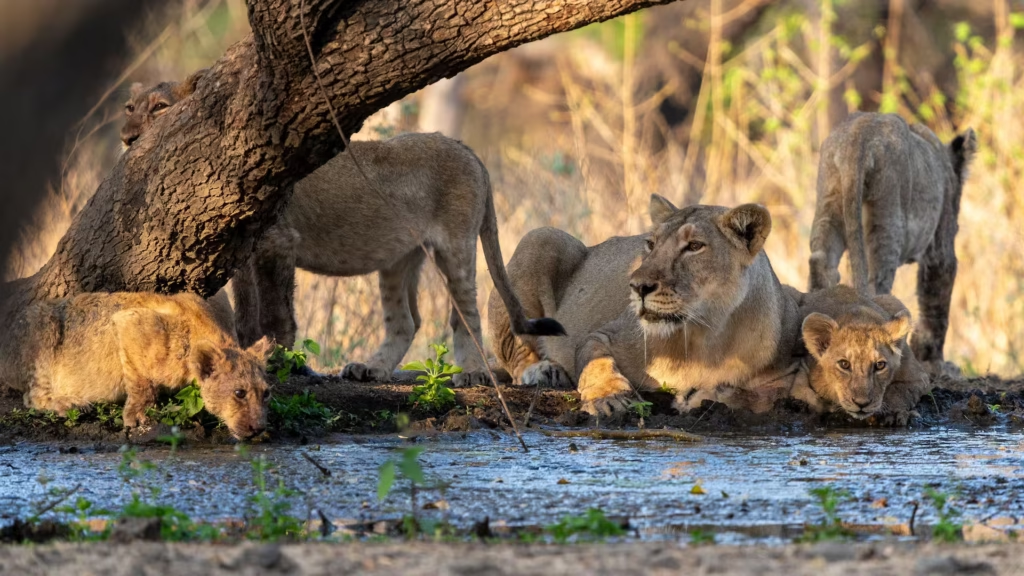
3 Nights / 4 Days
Gir Budget Tour
Spend four days in Gir with jeep safaris, comfortable stays, and chances to see Asiatic lions and other wildlife across the forest.
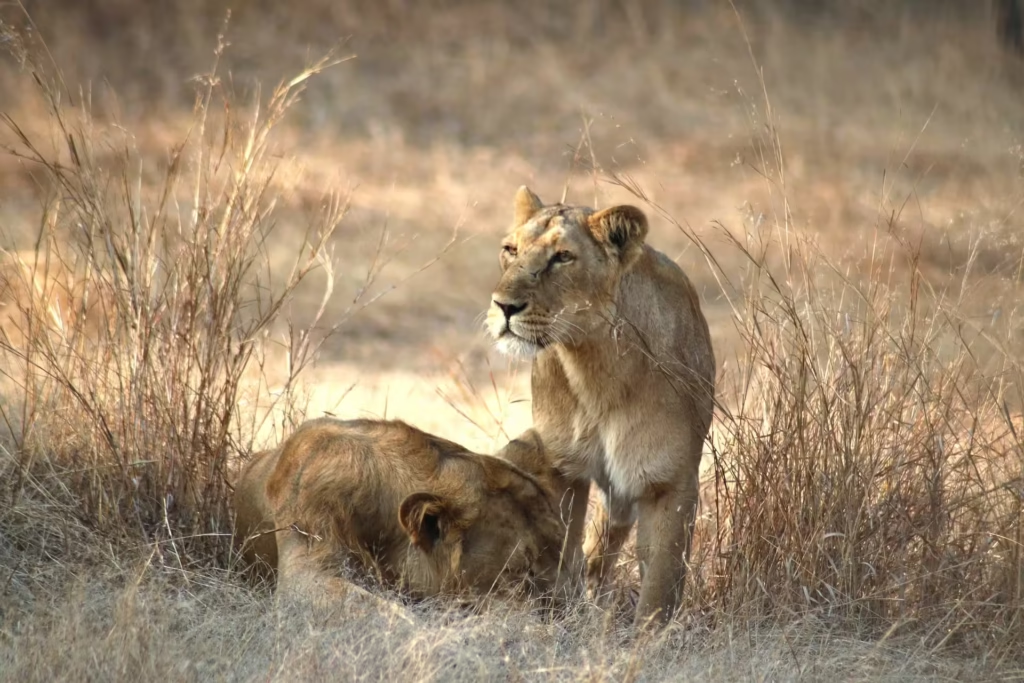
8 Nights / 9 Days
Asiatic Lion's & Leopards Special
This tour focuses on two rare big cats of western India. Track Asiatic lions in Gir and watch leopards around the rocky hills and villages of Bera.
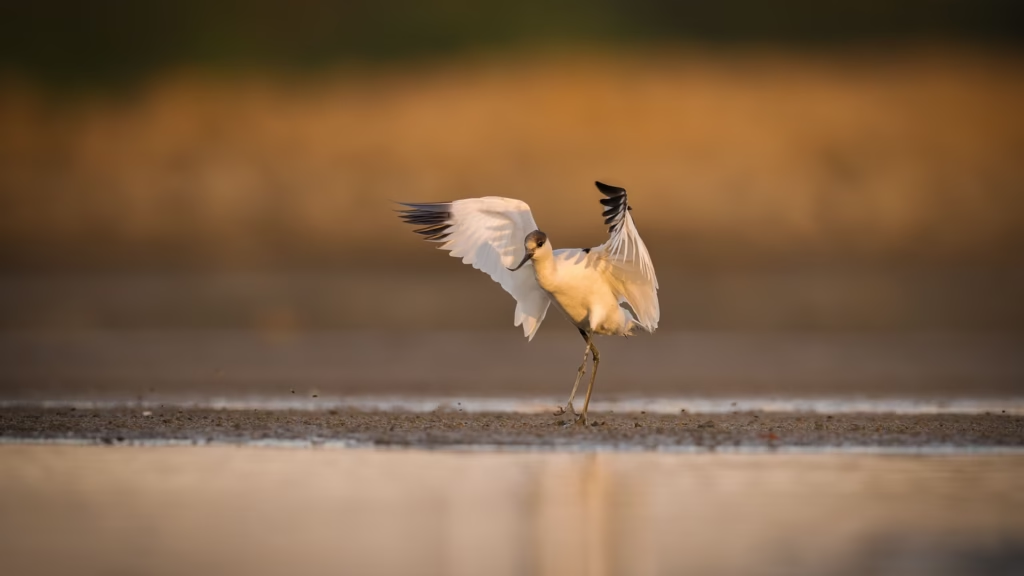
10 Nights / 11 Days
Big Cats and Birding Tour
Four wildlife destinations across Rajasthan and Gujarat. Tigers, Leopards, Asiatic Lions, Wild Ass, and exceptional birding on one connected western India route.
Recommended Tour
Gir National Park
Travel 4 Days | 1 Park | 6 Safari
Want to join Gir Group Tours?
If you are a solo traveler, traveling alone, or a couple, and are planning to join a group safari tour to reduce safari costs, please check out our fixed group tour dates for Gir National Park and join the dates that suit you best.
How to book Safari in Gir National Park Safari
To book an end-to-end safari package in Gir National Park including airport transfer, accommodation, meals, and internal transfer, you may contact Big Cats India, or schedule a free discussion with our experts to understand the best safari zone to book, based on your area of interest.
It is advised to plan your safari well in advance to get the best zones for sightings in Gir. If you are not sure which gate(s) to choose from, you can contact Big Cats India or message us for any assistance to book your safari in Gir.
You can also book Gir Safari online government website. However, this websites only book your safari permits, not the jeep, accommodation, food and internal transfer to the reserve gates.
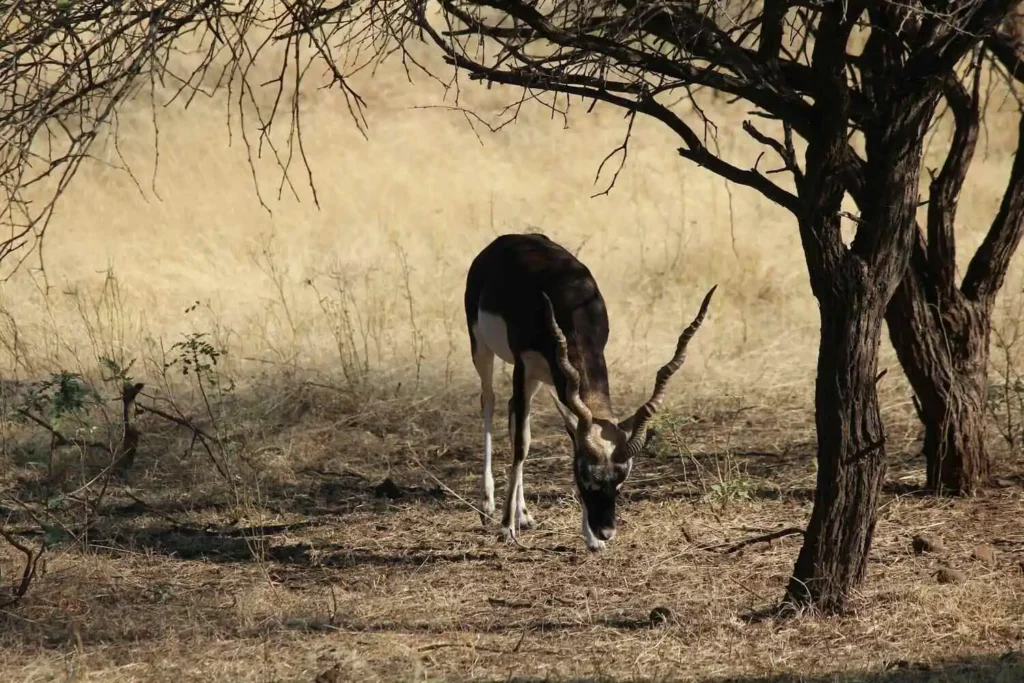
Weather in Gir
As the months go by, Gir witnessing a very diverse climate ranging from 7°C to 43°C throughout the year.
The summer season from March to May has extreme temperatures and barely any rainfall (28°C to 43°C). June to October is the monsoon season (25°C to 35°C) with heavy rains of about 70% of annual rain. The park becomes inaccessible and thus remains closed in this time.
October to November is the post monsoon season with few showers and decent climate (22°C to 32°C). Winter is the most comfortable and pleasant season between November to February as temperatures vary from 7°C to 28°C.
November - February
Gir in Winters
The perfect season with rare rain showers and pleasant weather is the winter. It is the peak season for tourists as animals are very active and spotted easily during jeep safaris. Be prepared for crowds and book your tickets in advance.
March – June
Gir in Summers
Heat waves and extreme high temperatures make the exploration experience slightly discomforting for visitors. But wildlife lovers do target this season as more fauna step out near waterholes and pose for perfect photographs. It is also a more intimate and quiet experience.
July – September
Gir in Monsoon
As mentioned earlier, the heavy rains cause soil erosion, reduce visibility and make the forest unsafe for tourists. The closure of the park at this time also is beneficial for the wildlife as it is their breeding season and they do not like to be disturbed.
| Monthly Temperature & Safari Activity Matrix (°C) | ||||||||||||
|---|---|---|---|---|---|---|---|---|---|---|---|---|
| Metric | Jan | Feb | Mar | Apr | May | Jun | Jul | Aug | Sep | Oct | Nov | Dec |
| Min Temp (°C) | 15 | 16 | 19 | 22 | 25 | 26 | 25 | 24 | 23 | 21 | 19 | 16 |
| Max Temp (°C) | 29 | 31 | 35 | 37 | 36 | 32 | 29 | 28 | 29 | 33 | 32 | 30 |
| Safari Status | Open | Open | Open | Open | Open | Open | Closed | Closed | Closed | Open | Open | Open |
Best time to spot Lions at Gir National Park
Undoubtedly, tourists travel long distances to spot the majestic Asiatic Lion in Gir National Park. You will capture one of the most iconic pictures of your safari trip when you sight a lion. Their size, shape of the mane and ecological agility makes them special and worth watching.
The best season to spot lions is the winter between November to February. The dry season thins out foliage offering better visibility. Due to the heat, these animals may be seen seeking shelter beneath a tree or by the waterholes to hydrate.
How to Reach the Gir
By Air
Flying to Keshod airport is the fastest way to get to Gir as it is only 70km away. You can also land in Rajkot and take a 4-hour road journey from there.
By Road
Gir is well connected by road from major cities. Ahmedabad is about 327 km away, while Rajkot is only 175 km from Gir. Surat is almost a 366 km drive.
By Rail
Trains offer the most cost effective and efficient travel. Stop at Junagadh (80 km) or Veraval (72 km) and take a taxi or bus to get to Gir.
| Gir's distance from important cities | |||
|---|---|---|---|
| From | By Air + Road (Hrs) | By Road | By Rail + Road (Hrs) |
| New Delhi | 2.00 Air + 4.30 Road | 18.5 Hrs | 22.00 Rail + 2.00 Road |
| Nagpur | 1.5 Air + 3.00 Road | 9.00 Hrs | NA |
| Mumbai | 2.00 Air + 2.00 Road | 7.00 Hrs | 14.00 Rail + 4.00 Road |
| Bengaluru | 1.00 Air + 3.00 Road | 20.00 Hrs | NA |
| Pune | 1.5 Air + 2.00 Road | 12.00 Hrs | 12.00 Rail + 4.00 Road |
| Jabalpur | NA | 15.00 Hrs | NA |
| Agra | 2.00 Air + 2.00 Road | 13.5 Hrs | 18.0 Rail + 2.00 Road |
| Keshod (Nearest) | NA | 1.5 Hrs | NA |
| Rajkot | NA | 2.00 Hrs | NA |
| Distance from Other Parks | |
|---|---|
| From | Time to Arrive |
| Bharatpur BS | 4 Hrs Road |
| Ranthambore | 5 Hrs Road |
| Kanha TR | 2.5 Hrs Air + 5.45 Hrs Road |
| Pench TR | 2.5 Hrs Air + 3 Hrs Road |
| Tadoba TR | 2.5 Hrs Air + 2 Hrs Road |
Things you should carry with you
Essential things to carry for your Gir Wildlife Safari
Your DSLR or Camera to capture your memorable safari moment.
Binoculars to view the wildlife from a safe distance.
Plenty of water to keep you dehydrated on a sunny day.
Hat & Shades to protect from direct sunlight.
Bandanna or Cotton Scarf to cover your face and avoid dust.
Winter wear or jacket if you are doing safari during winters. It really gets cold very quickly after sunsets in Jungle.
Rain Cover to save you and your gears from water during rain.

Some History abou Gir Nationa Park
The Gir National Park started in the early 1900s. At that time, there were only about a dozen Asiatic lions left, which had been hunted by kings and game hunters. The Nawab of Junagadh recognized this as an emergency and took protective measures in 1913. This was the first phase towards turning Gir into a sanctuary.
In 1965 it was declared as a national park solely for conserving last remaining Asiatic lions. Since then efforts have been made with single mindedness. The population has grown from extinction to abundance, providing evidence of the importance of the park in safeguarding these endangered species.
Today, Gir National Park is known worldwide as one among successful stories relating wildlife conservation where tourists flock to see Asiatic Lions and enjoy other forms rich biodiversity found within its boundaries
Why visit Gir?
Come to Gir National Park if you want an amazing experience with wildlife! Marvel at the majestic Asiatic lion – critically endangered and can be found nowhere else except their Africa cousins. This is their only surviving habitat saved by work done under conservation strategy success.
Discover different types of plants and animals such as leopards or sloth bears and over 300 bird species. Jeep safaris are thrilling ways to encounter animals living freely within their natural surroundings. Embrace all that’s beautiful about nature in Gir – A paradise for those who love nature and tribute paid towards protecting the wild.
Gir General Info Card
Total Area
1,410 Sq. Km
Location
Gujarat, India
Notified as Wildlife Sanctuary
1965
Nearest Airport
keshod (160 KM)
Nearest Railway Junction
Junagadh (65 KM)
Gir Wildlife Info Card
Carnivorous
Asiatic Lion, Jungle Cat, leopard, Hyena
Herbivorous
Sambar deer, Chinkara, Four-horned antelope, Nilgai, Wild boar
Omnivorous
Honey badger, Sloth bear, Mongoose species
Birds
425 Species of Birds
Gir Tour Info Card
Ideal Tour Length
3N4D or 6 Safaris
Can extend with
Ranthambore, Jawai, Pench
Tour Starting points
Delhi, Jaipur, Rajkot
Is Tour Customizable?
Yes
Safari Options
Open Jeep, Canter
Do’s and Don’ts of having an awesome Safari experience in Gir
Gir's dry forests are home to Asiatic lions, leopards, deer, crocodiles and diverse birdlife. Follow these simple guidelines for a safe safari and respectful wildlife viewing.
Advance Booking & ID
Book your safari in advance and carry a valid photo ID required for entry.
Protective Clothing
Choose neutral, earthy colours and carry a light jacket for cool winter mornings.
Carry Water & Essentials
Carry drinking water, sunglasses, sunscreen and a camera with extra batteries.
Safety technique directive: Stay inside the vehicle, keep noise low and follow instructions from your guide and forest staff.
Gir National Park FAQs
What are some things to do besides safaris?
While safaris are the main attraction, you can also visit nearby interpretation centers to learn more about the park’s ecology and conservation efforts. Birdwatching and nature walks are other options for those interested in exploring the park’s diverse flora and fauna.
What are the chances of seeing a lion on safari?
While there’s never a guaranteed sighting, the chances of seeing a lion in Gir National Park are relatively high, especially during the dry season when visibility is better. Early morning and late afternoon safaris are generally considered the best times for spotting lions.
What are the different safari zones in Gir National Park?
The park offers various safari zones catering to different preferences. The most popular is Sasan Gir Zone for a high chance of seeing lions. Devalia Interpretation Zone is a smaller, fenced area ideal for families. For an off-the-beaten-path adventure, explore Kamaleshwar Zone.
What is Gir National Park famous for?
Gir National Park is world-renowned for being the last refuge of the Asiatic lion, the only wild population outside Africa. These majestic cats are the park’s star attraction.