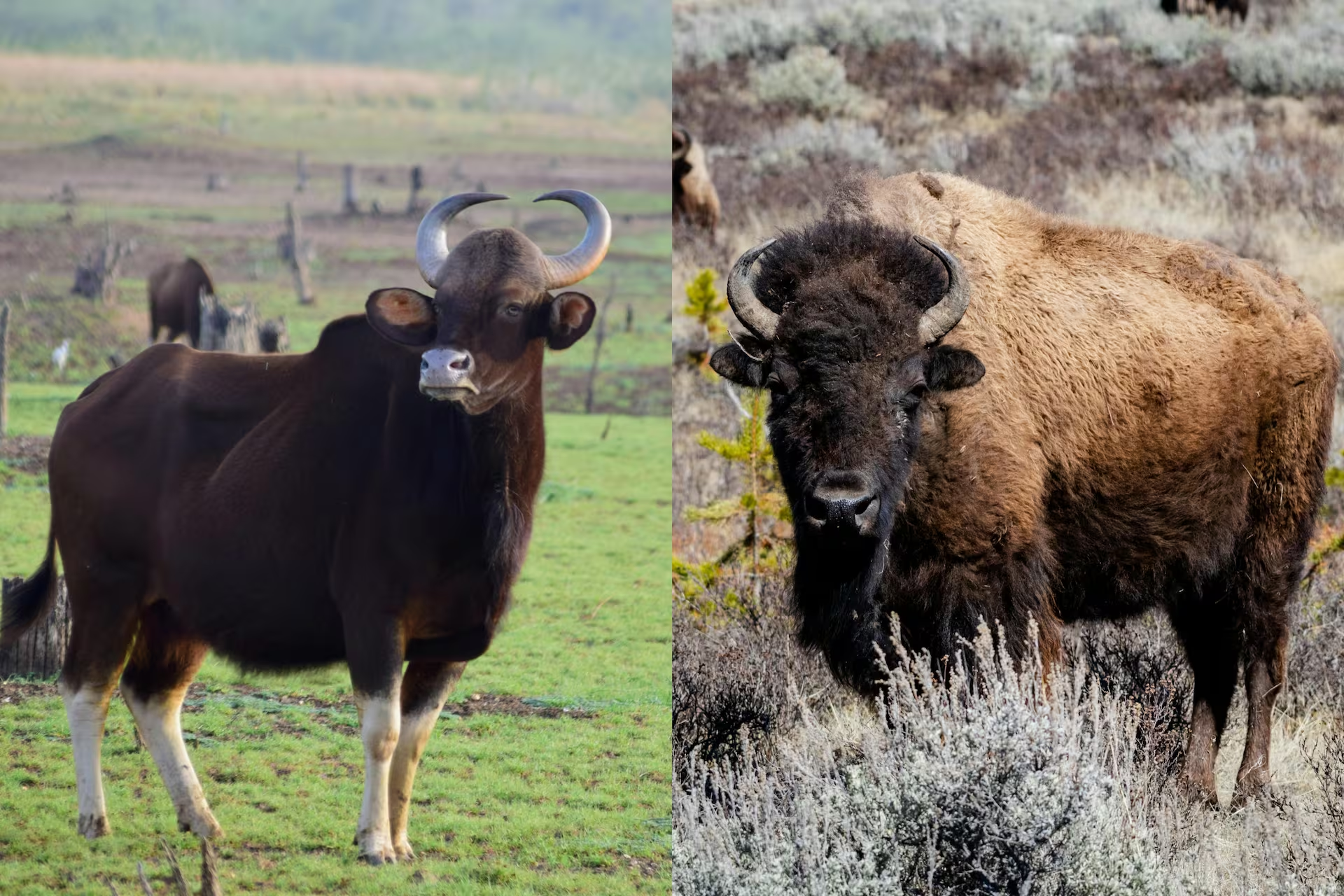
The American Bison and Indian Gaur are two of the largest wild bovines on Earth. Both animals command respect with their massive size and raw power. But these giants come from different continents and live very different lives.
Many wildlife lovers want to know how these two compare. Which one is bigger? Which is more dangerous? Where can you see them? This guide answers all those questions and more.
American Bison
The American Bison (Bison bison) is the largest land animal in North America. These powerful creatures once roamed the Great Plains in millions. They have a distinctive hump on their shoulders and a thick, shaggy coat that helps them survive harsh winters.
Bison live in grasslands and prairies across the United States and Canada. Today, around 500,000 bison exist, mostly in protected areas and private ranches. They stand as a symbol of wildlife conservation success in America.
Indian Gaur
The Indian Gaur (Bos gaurus) is the largest wild cattle species in the world. People also call it the Indian Bison, though it is not a true bison. Gaur have a muscular build with a distinctive ridge on their back and white or tan legs that look like stockings.
These animals live in the dense forests and grasslands of India, Nepal, Bhutan, and Southeast Asia. Wild populations number around 13,000 to 30,000. The IUCN lists them as Vulnerable due to habitat loss and disease.
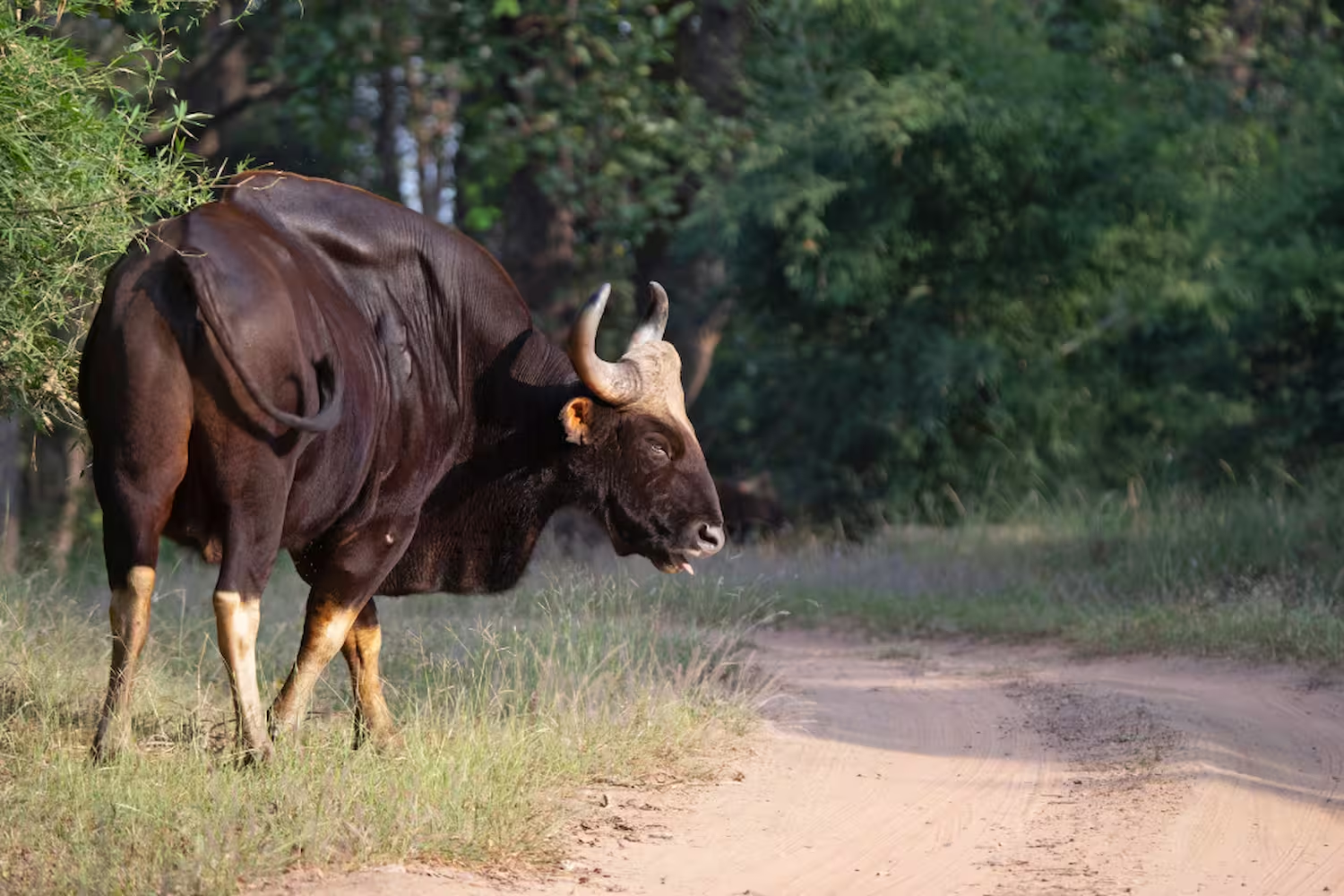
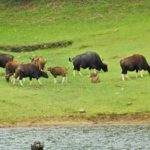
Indian Gaur in Bandhavgarh

American Bison in Yellowstone NP
Size and Physical Differences
The Gaur wins the size contest. Male Gaur can stand up to 7.2 feet tall at the shoulder and weigh between 1,500 to 2,200 pounds. Some massive bulls reach nearly 3,300 pounds.
American Bison are shorter but still impressive. Males stand about 6 feet tall at the shoulder and weigh between 1,000 to 2,000 pounds. The heaviest bison on record weighed around 3,800 pounds, but this is extremely rare.
Size Comparison Table
| Feature | American Bison | Indian Gaur |
|---|---|---|
| Height (Shoulder) | 5 to 6.5 feet | 5.6 to 7.2 feet |
| Weight (Male) | 1,000 to 2,000 lbs | 1,500 to 2,200 lbs |
| Maximum Weight | Up to 3,800 lbs (rare) | Up to 3,300 lbs |
| Body Length | 7 to 11.5 feet | 8.5 to 11 feet |
| Horn Length | 12 to 24 inches | Up to 36 inches |
| Horn Shape | Short, curved upward | Long, crescent-shaped |
Physical Characteristics
American Bison
- Front-heavy build with massive shoulder hump
- Thick, shaggy brown coat (darker in winter)
- Large head covered in dense fur
- Short tail with tuft at the end
- Dark brown to black on head and shoulders
Indian Gaur
- Muscular, athletic build with dorsal ridge
- Short, smooth coat (dark brown to black)
- White or tan “stockings” on all four legs
- Prominent dewlap under chin
- Lighter colored saddle on back in some individuals
Habitat and Range
American Bison once roamed from Alaska to Mexico. Today, they live in national parks, reserves, and ranches across North America. You will find them in places like
- Yellowstone National Park
- Wood Buffalo National Park
- the Great Plains.
Bison prefer open grasslands and prairies. They can handle extreme cold thanks to their thick winter coat. These animals migrate seasonally to find fresh grass and water.
Indian Gaur live in forested hills and mountains. They prefer areas with dense vegetation, water sources, and access to grasslands for grazing. You will find them in the Western Ghats, Central Indian forests, and parts of Northeast India.
Gaur need tropical and subtropical climates. They cannot survive extreme cold like bison can. During hot summer months, they stay in shaded forest areas and come out to graze during cooler hours.
Behavior and Social Structure
American Bison are social animals that live in herds. Female bison and their calves form the main groups. Males either live alone or in small bachelor groups. During mating season (July to September), bulls join the herds and compete for females.
Bison can be unpredictable and dangerous. They may look calm, but they can charge at speeds up to 35 miles per hour. More people get injured by bison than by bears in Yellowstone National Park.
Indian Gaur also live in herds led by an older female. Herds typically have 8 to 11 animals, but groups of 40 or more have been seen. Adult males often live alone and only join herds during mating season.
Gaur are generally shy and avoid humans. However, lone bulls can be aggressive and unpredictable. When threatened, they stand their ground and can be extremely dangerous. Forest guards and wildlife experts consider them one of the most dangerous animals in Indian forests.
Diet and Feeding Habits
American Bison are pure grazers. They eat grasses, sedges, and other prairie plants. In winter, they use their large heads to sweep away snow and reach the grass below. Bison spend most of their day grazing and can consume up to 30 pounds of vegetation daily.
Indian Gaur are both grazers and browsers. They eat grasses, leaves, bark, fruit, and shrubs. Gaur prefer to graze in open areas during early morning and late evening. During the day, they rest in the forest and chew their cud.
Both animals need access to water daily. Bison will travel long distances to find water sources. Gaur prefer to stay near streams and water holes.
Diet Breakdown
| Diet Component | American Bison | Indian Gaur |
|---|---|---|
| Primary Food | Grasses, sedges | Grasses, bamboo shoots |
| Secondary Food | Prairie plants | Leaves, bark, fruit |
| Feeding Type | Grazer | Grazer and browser |
| Daily Intake | 24 to 30 lbs | 44 to 66 lbs |
| Feeding Time | Throughout the day | Dawn and dusk mainly |
| Water Needs | Daily | Daily |
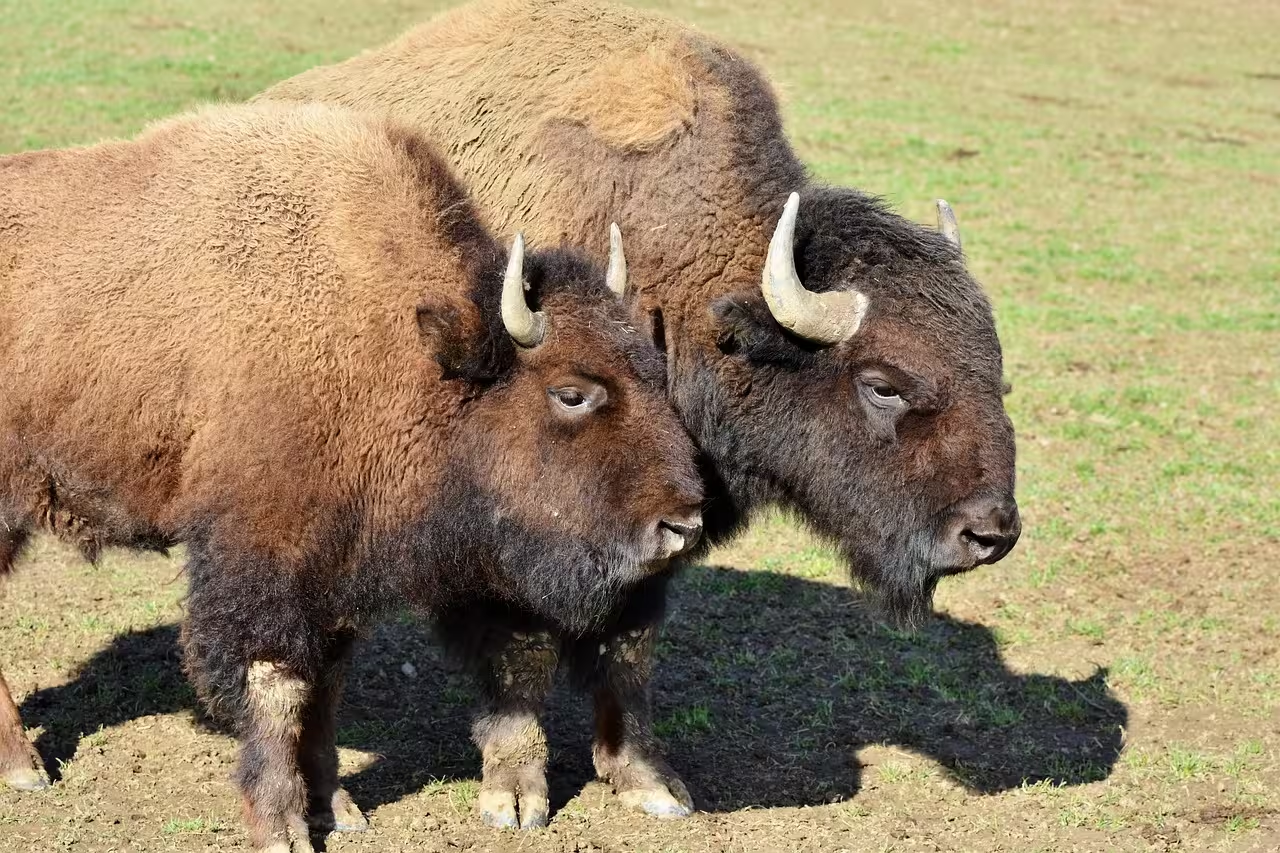
American Bison in Wild
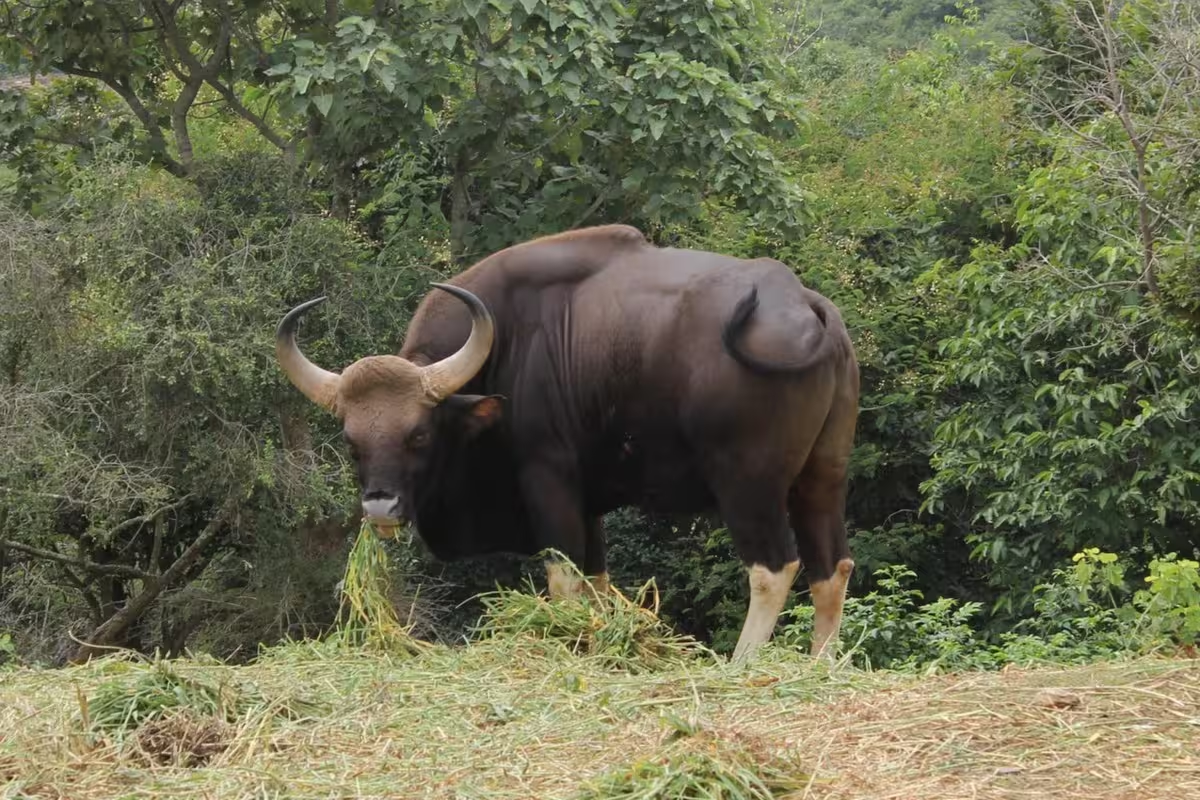
Indian Gaur in Wild
Conservation Status
American Bison: A Comeback Story
The American Bison has one of the greatest conservation comeback stories. Here is how their population changed over time:
Bison Population Timeline
- Pre-1800s: 30 to 60 million bison roam North America
- 1830s-1880s: Mass hunting and habitat destruction begin
- 1889: Fewer than 1,000 bison remain (near extinction)
- 1905: American Bison Society founded to save the species
- 1913: First bison herd protected in Wind Cave National Park
- 1950s: Population slowly grows in protected areas
- 2000s: More than 500,000 bison exist across North America
- Today: Species is stable but wild populations still limited
Conservation efforts brought them back from near extinction. Today, bison populations are stable. They live in protected parks, tribal lands, and private ranches. The species is no longer considered threatened.
Current Threats to Bison
- Limited genetic diversity in some herds
- Disease transmission from domestic cattle
- Habitat fragmentation
- Conflicts with ranchers over grazing land
Indian Gaur: Ongoing Challenges
Indian Gaur face ongoing threats. Habitat loss is the biggest problem. Forests are cleared for agriculture and development. Gaur also suffer from diseases transmitted by domestic cattle. Poaching still happens in some areas.
Gaur Population Timeline
- Pre-1900s: Large populations across South and Southeast Asia
- 1900s-1960s: Hunting and habitat loss reduce numbers significantly
- 1972: Wildlife Protection Act in India provides legal protection
- 1986: Listed as Vulnerable by IUCN
- 1990s-2000s: Some populations stabilize in protected areas
- 2010s: Habitat loss continues, disease outbreaks occur
- Today: 13,000 to 30,000 wild Gaur remain, status still Vulnerable
Conservation groups work to protect Gaur habitat and create wildlife corridors. Several Indian national parks have healthy Gaur populations. However, the species remains Vulnerable and needs continued protection.
Current Threats to Gaur
- Habitat loss and fragmentation
- Diseases from domestic cattle (foot-and-mouth, anthrax)
- Human-wildlife conflict in agricultural areas
- Poaching (though less common now)
- Climate change affecting forest ecosystems
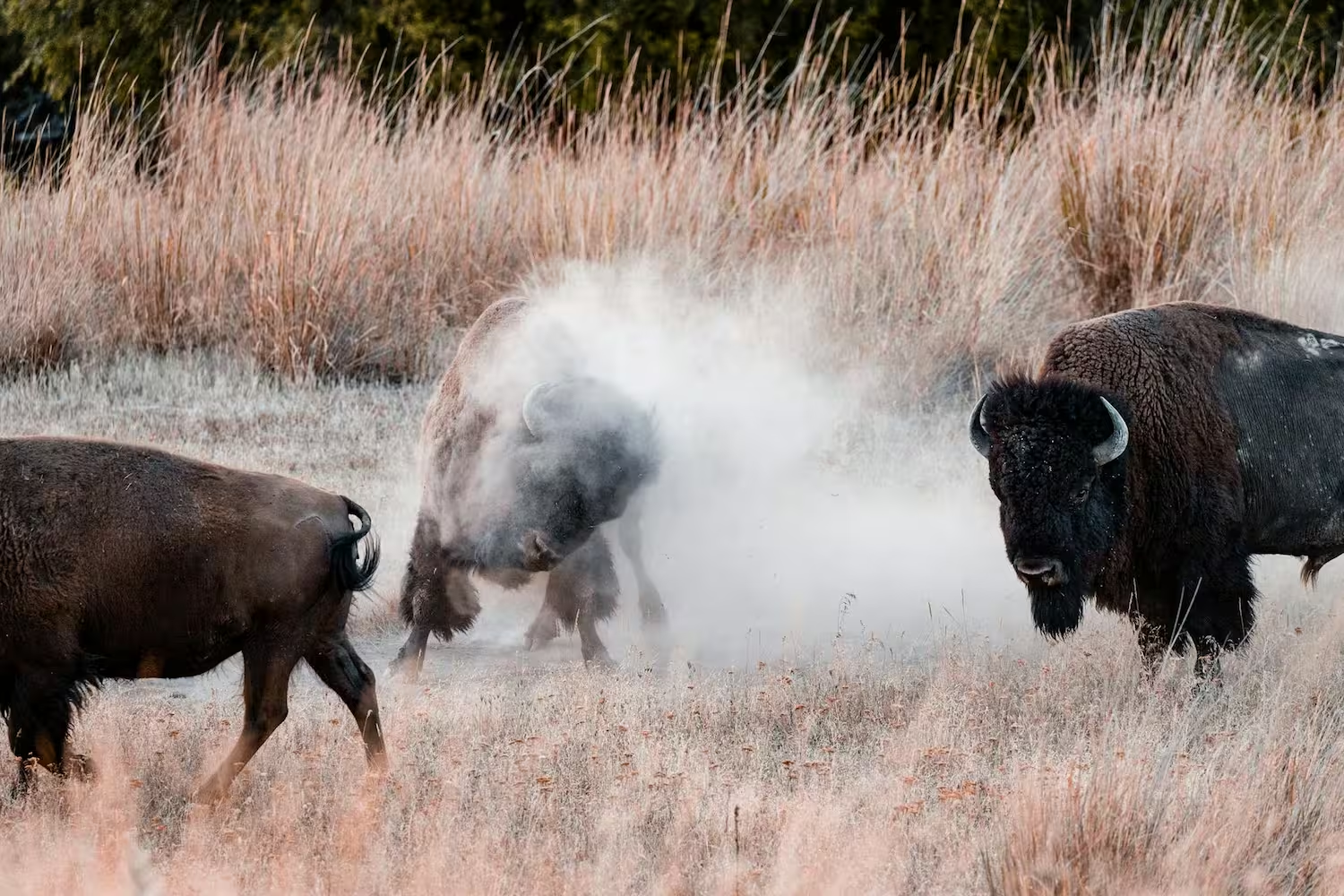
American Bison Fighting
Where to See Them in the Wild
Best Places to See American Bison
You can see American Bison in several national parks across the United States and Canada. Yellowstone National Park in Wyoming has one of the largest wild herds with around 5,000 animals. Wood Buffalo National Park in Canada protects the largest free-roaming bison herd in the world. Many state parks and wildlife refuges across the Great Plains also have bison populations.
Top Bison Viewing Locations
| Location | State/Province | Herd Size | Best Time to Visit |
|---|---|---|---|
| Yellowstone National Park | Wyoming | ~5,000 | May to October |
| Wood Buffalo National Park | Alberta, Canada | ~5,000+ | June to September |
| Theodore Roosevelt NP | North Dakota | ~600 | May to September |
| Badlands National Park | South Dakota | ~1,200 | May to October |
| Custer State Park | South Dakota | ~1,400 | Year-round |
| Wind Cave National Park | South Dakota | ~400 | May to October |
Best Places to See Indian Gaur
Indian Gaur are found in several national parks across Central and South India. The Western Ghats and Central Indian forests offer the best chances to see these magnificent animals. Early morning and late evening safaris give you the highest probability of sightings as Gaur are most active during these times.
Top Gaur Viewing Locations in India
| National Park | State | Gaur Population | Best Time to Visit | Safari Success Rate |
|---|---|---|---|---|
| Nagarhole National Park | Karnataka | High | October to May | 80% to 90% |
| Bandipur National Park | Karnataka | High | October to May | 75% to 85% |
| Kanha National Park | Madhya Pradesh | Moderate to High | October to June | 70% to 80% |
| Tadoba National Park | Maharashtra | Moderate to High | October to June | 65% to 75% |
| Kaziranga National Park | Assam | Moderate | November to April | 60% to 70% |
| Periyar Tiger Reserve | Kerala | High | September to March | 70% to 80% |
| Mudumalai National Park | Tamil Nadu | High | October to May | 75% to 85% |
Safari Tips for Gaur Sightings
- Book early morning safaris (6:00 AM to 9:00 AM)
- Evening safaris (3:00 PM to 6:00 PM) also work well
- Visit during dry season when animals come to water sources
- Choose zones with grassland-forest mix
- Stay quiet during safari and listen to your guide
- Carry binoculars for distant sightings
Ready to spot Gaur on safari? Fill Our Inquiry Form →
Why Indian Gaur is not a bison
There is no true bison species in India.
American Bison evolved in North America and belong to a different animal group. They have a shoulder hump and thick fur.
Indian Gaur evolved in Asia and belong to the wild cattle family. They do not have a hump and are closer to domestic cattle in lineage.
The term Indian bison came from early comparisons based on size, not science. Wildlife experts and forest departments officially recognize the animal as Indian Gaur.
Quick Comparison Grid
| Feature | American Bison | Indian Gaur |
|---|---|---|
| Largest wild bovine? | No | Yes (tallest) |
| Heaviest on record? | Yes (3,800 lbs max) | No (3,300 lbs max) |
| Can survive extreme cold? | Yes | No |
| Lives in forests? | No | Yes |
| Dangerous to humans? | Extremely dangerous | Extremely dangerous |
| Conservation status? | Stable | Vulnerable |
| Faster runner? | Yes (35 mph) | Close (34 mph) |
| More shy around humans? | No | Yes |
FAQs
Are Indian Gaur bigger than American Bison?
Indian Gaur are usually taller and heavier, making them the largest wild cattle
Is there any bison in India?
No. India has no true bison species. The animal often called Indian bison is the
Can tigers kill gaur?
Tigers may attack young or weak gaur. Healthy adults are very difficult to kill.
Are gaur commonly seen on tiger safaris?
Yes. Gaur sightings are common in many Indian national parks.
Final Thoughts
Both the American Bison and Indian Gaur are magnificent animals. The Gaur takes the title for largest wild bovine by height and average weight, but the Bison holds the record for the heaviest individual ever recorded.
These animals represent the wild spirit of their respective continents. Bison symbolize the American West and conservation success. Gaur are icons of Indian forests but still need our protection.
If you love wildlife, seeing either of these giants in their natural habitat is unforgettable. Both remind us why protecting wild spaces matters.
Want to see Gaur in India’s best national parks? We can help you plan the perfect safari.
WhatsApp Us Now: +91 98 2208 3308